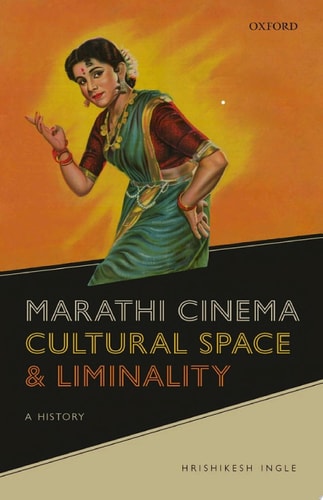
Marathi Cinema, Cultural Space, and Liminality: A History
0
0
As an Amazon Associate and affiliate partner, Menrva Books earns from qualifying purchases. Learn more
Author Description
This book is a critical history of Marathi cinema, from its formative years in the 1920s till the end of 1990s. It is the first work to explore the industrial and aesthetic dynamics of Marathi cinema, and elaborate on the idea of region as performance using the framework of critical socio-spatial analysis. Against the dominance of Hindi cinema, the Marathi film industry, as a regional film practice in India, has developed within a cultural and spatial liminality. This historical situation of the Marathi film industry is formulated here as the shaping and dispersal of a vernacular cultural space; and is traced over a period of seven decades, across genres like the saint-film, social melodramas, and the tamasha film, as well as in urban and mofussil sites of film circulation. The book aims to be a useful resource for students, researchers, and general readers, while attending to a lack of scholarly inquiries on this important regional film culture.
Menrva's Summary
THE THESIS
This book investigates how the Marathi film industry established a distinct vernacular cultural space while operating within the shadow of the dominant Hindi film industry from the 1920s through the 1990s. Hrishikesh Sudhakar Ingle utilizes a socio-spatial analytical framework to examine the industrial and aesthetic evolution of regional cinema in India. By focusing on the concept of liminality, the author argues that Marathi cinema functioned as a performance of regional identity that navigated complex urban and mofussil landscapes over seven decades.
THE SCOPE MAP
What You Will Find
- A historical survey of Marathi cinema spanning from the 1920s to the end of the 1990s.
- Analysis of specific genre developments including saint-films, social melodramas, and tamasha films.
- Application of critical socio-spatial theory to regional film circulation and production.
Scope Limits
- The study does not extend its primary historical analysis beyond the end of the 1990s.
- The text focuses specifically on the Marathi regional industry and does not provide a comprehensive history of Indian cinema as a whole.
THE AUTHORITY PERSPECTIVE
Scholars and film historians recognize this work as a foundational text for filling a significant gap in the academic literature regarding regional Indian film cultures. Readers frequently note the academic density of the prose, which makes it a specialized resource for students and researchers in media and cultural studies.
Page Count:
294
Publication Date:
2022-01-01
Publisher:
OUP Oxford
ISBN-10:
0192675931
ISBN-13:
9780192675934
Individual Director
Film History
Sociology
Humanities
Indian Cinema
Media Studies
Community Tags
Similar Books