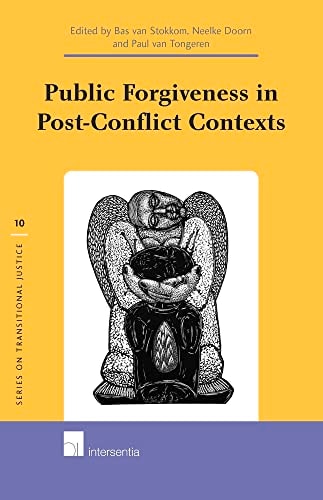
Public Forgiveness in Post-conflict Contexts
0
0
As an Amazon Associate and affiliate partner, Menrva Books earns from qualifying purchases. Learn more
Author Description
There seems to be a pervasive trend towards public apologies, forms of national introspection, and appeals to grant forgiveness. Does 'forgiveness' enable a public or political use of the term? Is it possible to forgive on behalf of others, and if so, under what conditions? These conceptual questions are related to reflections on the cultural and religious contexts of expressing forgiveness. Do forgiving words promote a willingness to look ahead and prevent a relapse into conflicting views on the poisonous past? Or do they bring along aversion? Maybe the 'push' towards forgiveness is experienced as highly unfair. Archbishop Tutu's motto that "there is no future without forgiveness" is well known. The South African Truth and Reconciliation Commission has become an important model and source of inspiration for many other countries that want to deal with their past grievances and internal conflicts. This book discusses the role of forgiveness within processes of peace building and transitional justice. (Series: Series on Transitional Justice - Vol. 10)
Menrva's Summary
THE THESIS
This book investigates the complex role of public forgiveness in societies grappling with past conflicts and grievances. It examines whether the concept of forgiveness can be effectively applied in public and political spheres, exploring the conditions under which forgiveness can be granted on behalf of others. The authors consider the cultural and religious contexts influencing the expression of forgiveness and question whether such expressions foster a forward-looking perspective or provoke aversion and feelings of unfairness.
THE SCOPE MAP
- Conceptual analysis of public forgiveness in post-conflict settings.
- Exploration of the cultural and religious dimensions of forgiveness.
- Discussion of the South African Truth and Reconciliation Commission as a model.
- Examination of forgiveness within peacebuilding and transitional justice processes.
- Analysis of whether public apologies and appeals for forgiveness promote reconciliation or aversion.
THE AUTHORITY PERSPECTIVE
This book is part of the Series on Transitional Justice, indicating its focus on academic and policy-oriented discussions within that field. The subject matter suggests a rigorous examination of the theoretical and practical challenges of implementing forgiveness in post-conflict societies, likely appealing to scholars, students, and practitioners in peace studies, political science, and sociology. The inclusion of Archbishop Tutu and the South African TRC points to a comparative approach, drawing on significant case studies to inform its arguments about the efficacy and fairness of public forgiveness.
Page Count:
262
Publication Date:
2012-01-01
Publisher:
Intersentia
ISBN-10:
1780680449
ISBN-13:
9781780680446
History
Politics
Non-Fiction
Transitional Justice
Peacebuilding
Sociology