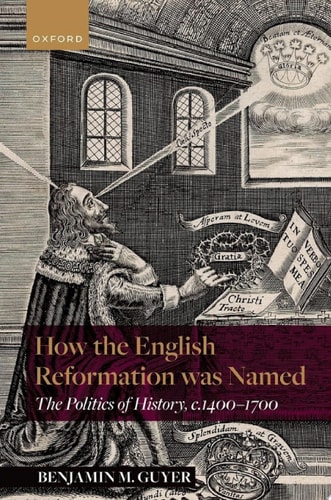
How the English Reformation was Named: The Politics of History, 1400-1700
0
0
As an Amazon Associate and affiliate partner, Menrva Books earns from qualifying purchases. Learn more
Author Description
How the English Reformation was Named analyses the shifting semantics of 'reformation' in England between the fifteenth and seventeenth centuries. Originally denoting the intended aim of church councils, 'reformation' was subsequently redefined to denote violent revolt, and ultimately a series of past episodes in religious history. But despite referring to sixteenth-century religious change, the proper noun 'English Reformation' entered the historical lexicon only during the British civil wars of the 1640s. Anglican apologists coined this term to defend the Church of England against proponents of the Scottish Reformation, an event that contemporaries singled out for its violence and illegality. Using their neologism to denote select events from the mid-Tudor era, Anglicans crafted a historical narrative that enabled them to present a pristine vision of the English past, one that endeavoured to preserve amidst civil war, regicide, and political oppression. With the restoration of the monarchy and the Church of England in 1660, apologetic narrative became historiographical habit and, eventually, historical certainty.
Menrva's Summary
THE THESIS
This work investigates the origins and political utility of the term 'English Reformation' within the context of seventeenth-century religious and civil conflict. Benjamin M. Guyer, a scholar of early modern history, examines how the semantic evolution of the word 'reformation' served specific apologetic functions for the Church of England. By analyzing primary texts and political discourse from 1400 to 1700, the author argues that the term was a strategic invention designed to construct a sanitized historical identity during the instability of the British civil wars.
THE SCOPE MAP
What You Will Find
- Analysis of the shifting definitions of 'reformation' from the fifteenth to the seventeenth century.
- Examination of Anglican apologetic literature during the 1640s.
- Comparison between the English and Scottish Reformation narratives.
- Investigation into how political crises influenced historical terminology.
Scope Limits
- The study does not provide a comprehensive history of the theological changes of the Reformation itself.
- It focuses primarily on the historiographical and political naming process rather than the social history of the period.
THE AUTHORITY PERSPECTIVE
Scholars recognize this text as a significant contribution to the study of early modern historiography and the construction of national religious identity. Readers frequently note the academic rigor and the precise linguistic analysis employed by the author to trace the development of historical terminology.
Page Count:
234
Publication Date:
2022-01-01
Publisher:
OUP Oxford
ISBN-10:
0192689614
ISBN-13:
9780192689610
Religion
History
English History
Historiography
History - Modern
Political History
Europe
Religious History
Community Tags
Similar Books