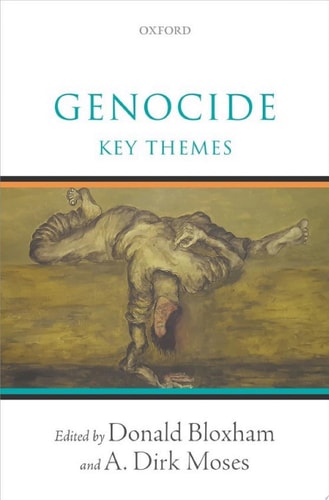
Genocide: Key Themes
0
0
As an Amazon Associate and affiliate partner, Menrva Books earns from qualifying purchases. Learn more
Author Description
The growth of scholarship on the pressing problem of genocide shows no sign of abating. This volume takes stock of Genocide Studies in all its multi-disciplinary diversity by adopting a thematic rather than case-study approach. Each chapter is by an expert in the field and comprises an up-to-date survey of emerging and established areas of enquiry while highlighting problems and making suggestions about avenues for future research. Each essay also has a select bibliography to facilitate further reading. Key themes include imperial violence and military contexts for genocide, predicting, preventing, and prosecuting genocide, gender, ideology, the state, memory, transitional justice, and ecocide. The volume also scrutinises the concept of genocide - its elasticity, limits, and problems. It does not provide a definition of genocide but rather encourages the reader to think critically about genocide as a conceptual and legal category concerned with identity-based violence against civilians.
Menrva's Summary
THE THESIS
This volume investigates the conceptual, legal, and historical dimensions of genocide by examining the field through thematic analysis rather than traditional case studies. The authors, Manuel Vargas and John M. Doris, curate a collection of essays from field experts to evaluate the current state of Genocide Studies. By avoiding a singular definition, the text encourages a critical assessment of how identity-based violence is categorized, prosecuted, and prevented within global political frameworks.
THE SCOPE MAP
What You Will Find
- Analysis of imperial violence and military contexts
- Methodologies for predicting and preventing mass atrocities
- Discussions on gender, ideology, state power, and memory
- Legal frameworks regarding transitional justice and ecocide
Scope Limits
- Does not provide a singular, definitive legal definition of genocide
- Avoids narrow, case-study-specific historical narratives in favor of broad thematic inquiry
THE AUTHORITY PERSPECTIVE
Experts recognize this volume as a comprehensive survey of the current academic landscape in genocide research. The text is frequently utilized by scholars and students for its multi-disciplinary approach to complex legal and sociological problems.
Page Count:
428
Publication Date:
2022-01-01
Publisher:
OUP Oxford
ISBN-10:
0192688731
ISBN-13:
9780192688736
History
World Civilization
Human rights
Sociology
Community Tags
Similar Books