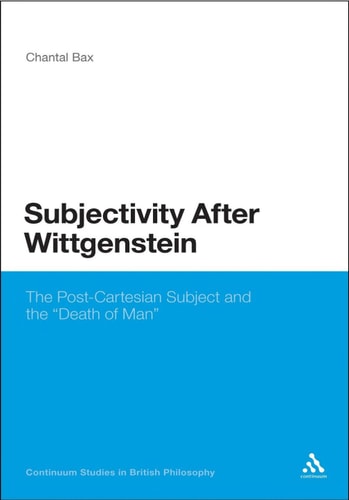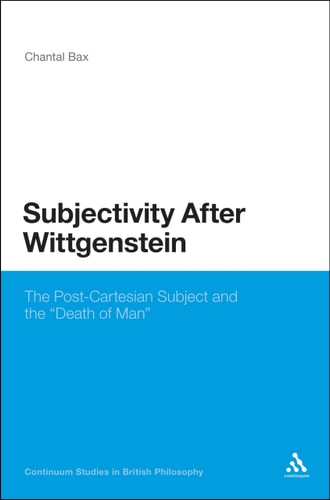
Subjectivity After Wittgenstein: The Post-Cartesian Subject and the "Death of Man"
0
0
As an Amazon Associate and affiliate partner, Menrva Books earns from qualifying purchases. Learn more
Author Description
Although Wittgenstein is often held co-responsible for the so-called death of man as it was pronounced in the course of the previous century, no detailed description of his alternative to the traditional or Cartesian account of human being has so far been available. By consulting several parts of Wittgenstein's later oeuvre, Subjectivity after Wittgenstein aims to fill this gap. However, it also contributes to the debate about the Cartesian subject and its demise by discussing the criticism that the rethinking of subjectivity received, for it has been argued that the anti-Cartesian turn in continental philosophy has lead to a loss of a centre for both ethics and politics. By further exploring the implications of the Wittgensteinian account of human being, this book makes it clear that a non-Cartesian view on the subject is not necessarily ethically and politically inert. Moreover, it argues that ethical and political arguments should not automatically take precedence in a debate about the nature of man.
Menrva's Summary
THE THESIS
This book investigates Ludwig Wittgenstein's alternative to the traditional Cartesian account of human subjectivity. It addresses the common perception that Wittgenstein contributed to the 'death of man' in 20th-century thought by examining his later philosophical works. The study also engages with critiques arguing that the anti-Cartesian turn in continental philosophy has weakened ethical and political foundations, proposing that a Wittgensteinian view of the subject is not inherently inert in these spheres.
THE SCOPE MAP
- Analysis of Wittgenstein's later philosophical works to define his concept of subjectivity.
- Exploration of the 'death of man' discourse and Wittgenstein's role within it.
- Examination of critiques regarding the ethical and political implications of anti-Cartesian thought.
- Argument for the ethical and political relevance of a non-Cartesian subject.
- Discussion on the precedence of ethical and political arguments in defining human nature.
- Contribution to the debate on the post-Cartesian subject.
THE AUTHORITY PERSPECTIVE
This book is positioned as a scholarly contribution to understanding Wittgenstein's philosophy of subjectivity and its implications for contemporary debates on ethics and politics. It aims to fill a perceived gap in scholarship by detailing Wittgenstein's alternative to Cartesian subjectivity. The work engages directly with critiques that associate the decline of the Cartesian subject with a loss of ethical and political grounding. By presenting a non-Cartesian view as potentially robust in these areas, the book seeks to reframe the discussion around the nature of the human subject.
Page Count:
208
Publication Date:
2013-05-01
Publisher:
Bloomsbury Academic
ISBN-10:
1441127321
ISBN-13:
9781441127327
Politics
Non-Fiction
Philosophy
Ethics
Continental Philosophy