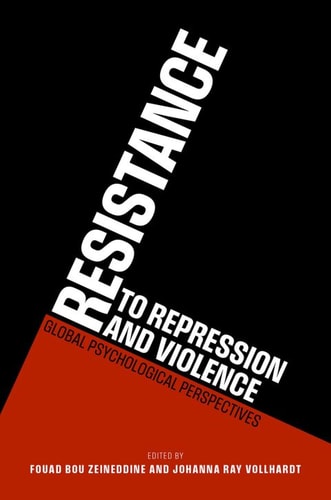
Resistance to Repression and Violence
0
0
As an Amazon Associate and affiliate partner, Menrva Books earns from qualifying purchases. Learn more
Author Description
Democratic backsliding, increased great power competition, hate speech and violence, mass atrocities and genocides, civil wars, revolution and counter-revolution, reactionary movements against women's and minority rights, advancements in surveillance, censorship, and policing technologies, and war--the 21st century has become increasingly repressive and dangerous for political participation across the globe. At the same time, there has been increased protest and a proliferation of resistance movements. This seeming paradox has raised many questions among publics, academics, and policy makers, including: What motivates people to resist at the risk of their lives and livelihoods? What actions do people choose to resist repression and oppression and why, and when do resistance strategies change? What causes people to come together or fall out over whether and how to resist? When and why does resistance under repressive conditions escalate or fade away? This edited volume presents our current state of knowledge as well as new research and theorizing on these questions about the psychology of resistance in violent and repressive contexts. The chapters in this volume represent a broad range of diverse contexts and contemporary as well as historical experiences of repression, violence, and resistance in Africa, Asia, Europe, and South America--from cyberwars to civil wars, from police and state repression to pogroms and genocide. Taken together, this volume highlights the importance of considering the sociopolitical and historical contexts of resistance, the heterogeneity and complexity of psychological paths to resistance, and the variety of strategies people adopt to enact resistance to violence and repression.
Menrva's Summary
THE THESIS
The 21st century presents a paradox of increasing repression alongside a proliferation of resistance movements. This edited volume investigates the psychological underpinnings of why individuals choose to resist oppression and violence, often at great personal risk. It explores the motivations behind collective action, the evolution of resistance strategies in response to changing conditions, and the factors that lead to both escalation and dissipation of movements. The research spans diverse global contexts, examining both contemporary and historical experiences of repression and resistance.
THE SCOPE MAP
- What motivates people to resist at the risk of their lives and livelihoods.
- What actions people choose to resist repression and oppression and why.
- When resistance strategies change.
- What causes people to come together or fall out over whether and how to resist.
- When and why resistance under repressive conditions escalates or fades away.
- The heterogeneity and complexity of psychological paths to resistance.
- The variety of strategies people adopt to enact resistance to violence and repression.
- Diverse contexts and experiences of repression, violence, and resistance in Africa, Asia, Europe, and South America.
THE AUTHORITY PERSPECTIVE
This volume synthesizes current knowledge and presents new research on the psychology of resistance in violent and repressive contexts. The chapters draw from a wide array of global experiences, from cyberwars to civil wars and state repression to genocide. It highlights the critical importance of considering sociopolitical and historical contexts, the complex psychological pathways to resistance, and the diverse strategies employed by individuals and groups. The collection aims to provide a comprehensive understanding of why and how people resist.
Page Count:
212
Publication Date:
2024-08-20
Publisher:
Oxford University Press Academic US
ISBN-10:
0197687695
ISBN-13:
9780197687697
Non-Fiction
History
Psychology
Sociology
Community Tags
Similar Books