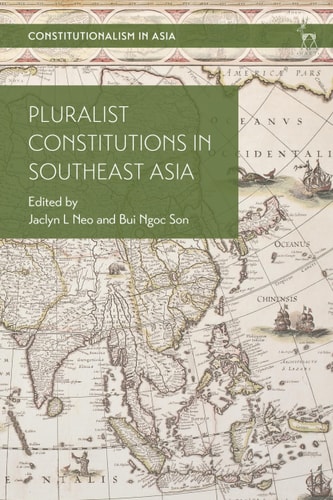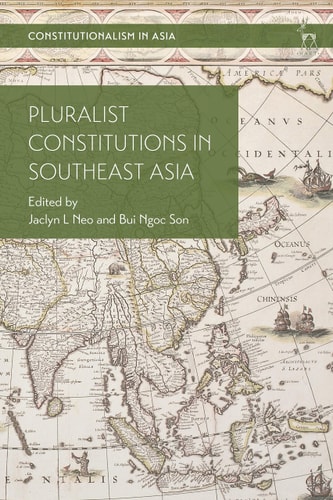
Pluralist Constitutions in Southeast Asia
0
0
As an Amazon Associate and affiliate partner, Menrva Books earns from qualifying purchases. Learn more
Author Description
This book examines the presence of ethnic, religious, political, and ideational pluralities in Southeast Asian societies and how their respective constitutions respond to these pluralities. Countries covered in this book are Brunei, Cambodia, Indonesia, Laos, Malaysia, Myanmar, the Philippines, Singapore, Thailand, and Vietnam. The chapters examine: first, the range of pluralist constitutional values and ideas embodied in the constitutions; secondly, the pluralist sources of constitutional norms; thirdly, the design of constitutional structures responding to various pluralities; and fourthly, the construction and interpretation of bills of rights in response to existing pluralities. The 'pluralist constitution' is thus one that recognises internal pluralities within society and makes arrangements to accommodate, rather than eliminate, these pluralities.
Menrva's Summary
THE THESIS
This book investigates how constitutions in Southeast Asia grapple with the inherent pluralities of their societies. It analyzes the constitutional frameworks of Brunei, Cambodia, Indonesia, Laos, Malaysia, Myanmar, the Philippines, Singapore, Thailand, and Vietnam, exploring how these documents acknowledge and accommodate ethnic, religious, political, and ideational diversity. The work delves into the constitutional values and norms that recognize internal pluralities, the design of governmental structures to manage these differences, and the interpretation of rights provisions in light of societal diversity. Ultimately, it defines a 'pluralist constitution' as one that actively makes arrangements to accommodate, rather than eliminate, the diverse elements within a nation.
THE SCOPE MAP
- Analysis of constitutional values and ideas related to pluralism in ten Southeast Asian nations.
- Examination of the diverse sources of constitutional norms within these societies.
- Detailed study of constitutional structures designed to respond to various societal pluralities.
- Investigation into the construction and interpretation of bills of rights in pluralistic contexts.
- Case studies of Brunei, Cambodia, Indonesia, Laos, Malaysia, Myanmar, the Philippines, Singapore, Thailand, and Vietnam.
- Focus on accommodation rather than elimination of internal societal pluralities.
THE AUTHORITY PERSPECTIVE
The book offers a comprehensive comparative analysis of constitutional approaches to pluralism across Southeast Asia. It is likely to be of significant interest to scholars and students of comparative constitutional law, Southeast Asian politics, and legal sociology. The detailed examination of specific countries and constitutional mechanisms provides valuable insights into the challenges and strategies of managing diversity through legal frameworks. The work contributes to a deeper understanding of how national legal systems engage with the complex social realities of the region.
Page Count:
312
Publication Date:
2020-11-19
Publisher:
Bloomsbury Academic
ISBN-10:
1509945687
ISBN-13:
9781509945689
Politics
Non-Fiction
History
Sociology
Constitutional Law