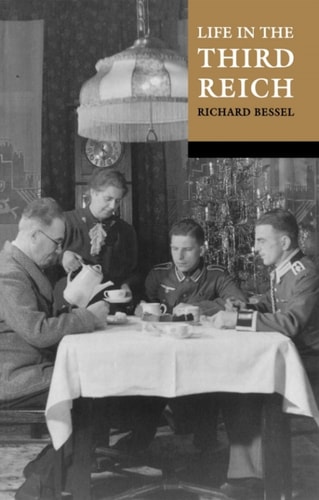
Life in the Third Reich
0
0
As an Amazon Associate and affiliate partner, Menrva Books earns from qualifying purchases. Learn more
Author Description
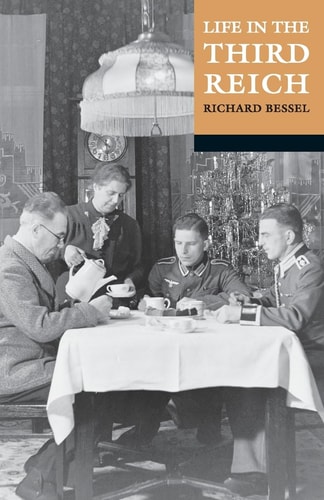
Even today, the Third Reich--the regime that instigated the most destructive war in modern history--evokes powerful images of fascination and horror. Yet how were the lives of the ordinary German people of the 1930s and '40s affected by the politics of Hitler and his followers? Looking beyond the catalog of events, this intriguing book reveals that daily German life involved a complex mixture of bribery and terror; of fear and concessions; of barbarism and appeals to conventional moral values employed by the Nazis to maintain their grip on society. Eight leading historians present essays that shed fresh light on topics as familiar as the role of political violence in Nazi seizure of power and the German view of Hitler himself. It also focuses on lesser-known aspects of life in the Third Reich, such as village life, the treatment of "social outcasts," and the Germans' own retrospective view of this period of their history.
Menrva's Summary
THE THESIS
This work investigates how the Nazi regime maintained social control over the German population through a calculated combination of state-sponsored terror and strategic concessions. Richard Bessel and a team of seven other historians analyze the daily experiences of ordinary citizens during the 1930s and 1940s. By moving beyond high-level political events, the contributors examine the mechanisms of coercion and the normalization of barbarism within the domestic sphere.
THE SCOPE MAP
What You Will Find
- Analysis of the role of political violence in the Nazi consolidation of power
- Examination of village life and social dynamics under the Third Reich
- Studies on the treatment of marginalized groups and social outcasts
- Perspectives on the German public's perception of Hitler
- Retrospective analysis of how the period is viewed in historical memory
Scope Limits
- Does not provide a comprehensive military history of the war
- Does not focus on the strategic decision-making of the Nazi high command
THE AUTHORITY PERSPECTIVE
Historians and scholars frequently cite this collection as a valuable resource for understanding the social history of Nazi Germany beyond the standard political narrative. The essays are noted for their ability to synthesize complex sociological factors into accessible academic prose.
Page Count:
168
Publication Date:
2001-10-25
Publisher:
Oxford University Press
ISBN-10:
0192802100
ISBN-13:
9780192802101
History
Social History
World War
Nazi Germany
European History