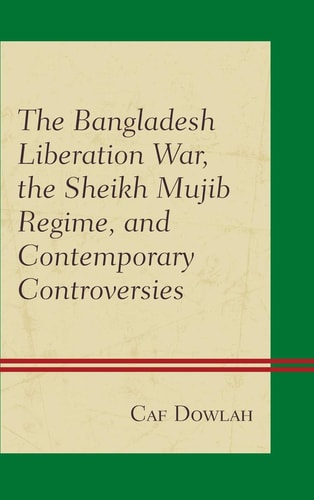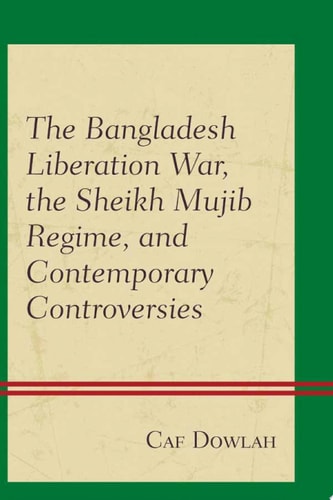
The Bangladesh Liberation War, the Sheikh Mujib Regime, and Contemporary Controversies
0
0
As an Amazon Associate and affiliate partner, Menrva Books earns from qualifying purchases. Learn more
Author Description
The study provides an in-depth, up-to-date, and scholarly analysis of the liberation war and the Sheikh Mujib Regime of Bangladesh. Situating the emergence of Bangladesh in the broader historical context of the partition of British India in 1947, the study re-examines: a) how Mujib successfully galvanized the legitimate grievances of Bangladeshi people during the united Pakistan period (1947–71) and how a highly successful guerilla warfare of Bangladeshi people led to dismemberment of Pakistan in 1971 with crucial military and political support from neighboring India; (b) how in the post-liberation Bangladesh the Mujib regime toyed with contradictory political ideologies of democracy and socialism, and eventually ended up with a one-party monolithic rule; (c) how in the economic sphere the Mujib regime vacillated between petty bourgeoisie and socialist inclinations by half-heartedly pursuing socialization of agriculture and nationalization of industries, which resulted in plundering of the economy and plunging of millions of people in famine and near-famine situations; (d) how in 1975 the assassination of Mujib and collapse of his ill-fated regime, that failed to deliver both economically and politically, evoked little sympathy from the masses; and (e) how the trial of the killers of Mujib after 21 years of his death, and the trial of the collaborators of the liberation war after four decades of the country’s liberation war, orchestrated by Sheikh Hasina government, keep the nation’s political discourse still sharply divided.
Menrva's Summary
THE THESIS
This study provides an in-depth, up-to-date, and scholarly analysis of the liberation war and the Sheikh Mujib Regime of Bangladesh, situating its emergence within the broader historical context of the partition of British India in 1947. It re-examines how Sheikh Mujibur Rahman galvanized grievances during the united Pakistan period, leading to the dismemberment of Pakistan through guerrilla warfare supported by India. The book further investigates the Mujib regime's contradictory political ideologies, its economic vacillations resulting in plundering and famine, the lack of public sympathy following Mujib's assassination, and the ongoing political divisions caused by subsequent trials of Mujib's killers and war collaborators.
THE SCOPE MAP
- The historical context of Bangladesh's emergence from the 1947 partition of British India.
- An analysis of Sheikh Mujibur Rahman's leadership and the 1971 liberation war, including guerrilla warfare and Indian support.
- An examination of the Mujib regime's political ideologies, including the shift from democracy to a one-party rule.
- An assessment of the regime's economic policies, socialization efforts, and their consequences.
- An analysis of the political and economic factors leading to the collapse of the Mujib regime.
- A discussion of the contemporary controversies surrounding the trials of Mujib's killers and war collaborators.
THE AUTHORITY PERSPECTIVE
The book offers a scholarly examination of a pivotal period in Bangladeshi history, delving into the complexities of the liberation war and the subsequent Mujib regime. Its detailed analysis of political and economic decisions, alongside the lasting impact of trials related to the war and Mujib's assassination, highlights the enduring controversies that continue to shape the nation's discourse. The work appears to be a comprehensive resource for understanding the foundational events and their long-term consequences in Bangladesh.
Page Count:
206
Publication Date:
2016-10-19
Publisher:
Bloomsbury USA
ISBN-10:
1498534198
ISBN-13:
9781498534192
History
Politics
Non-Fiction