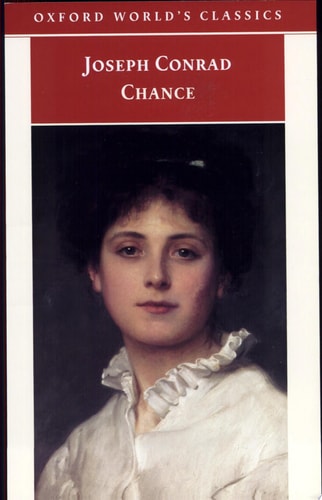
Chance: A Tale in Two Parts
0
0
As an Amazon Associate and affiliate partner, Menrva Books earns from qualifying purchases. Learn more
Author Description
Chance(1914) was the first of Conrad's novels to bring him popular success and it holds a unique place among his works. It tells the story of Flora de Barral, a vulnerable and abandoned young girl who is "like a beggar, without a right to anything but compassion." After her bankrupt father is imprisoned, she learns the harsh fact that a woman in her position "has no resources but in herself." Her only means of action is to be what she is. Flora's long struggle to achieve some dignity and happiness makes her Conrad's most moving female character.Reflecting the contemporary interest in the New Woman and the Suffragette question, Chance also marks the final appearance of Marlow, Conrad's most effective and wise narrator. This revised edition uses the English first edition text and has a new chronology and bibliography.
Menrva's Summary
THE PULSE
Flora de Barral, a young woman cast into social and financial ruin following her father's imprisonment, must navigate a world that offers her little agency or protection. Flora struggles to establish a sense of self-worth and independence while contending with the societal expectations placed upon women in the early twentieth century. The narrative is presented through a complex, multi-layered framework, utilizing the perspective of the recurring narrator Marlow to observe and interpret the events surrounding Flora's life. The story examines the logical constraints of Victorian social structures and the psychological toll of isolation on the individual.
INSIDE THE PAGES
- Multi-layered narrative structure
- Use of the recurring character Marlow as a primary narrator
- Exploration of the New Woman and Suffragette social movements
- Focus on the psychological interiority of the protagonist
- Examination of financial ruin and social abandonment
- Intricate, non-linear storytelling techniques
- Detailed character studies of secondary figures
- Critical commentary on Victorian gender roles
THE COLLECTIVE ECHO
Readers and critics frequently note the stylistic complexity of the prose, which is characteristic of Conrad's later period. Discussion often centers on the effectiveness of the multi-layered narrative frame and how it influences the reader's perception of Flora's character development. Many observers highlight the novel's engagement with contemporary social issues, particularly the evolving status of women in the early twentieth century. The pacing is often described as deliberate, prioritizing psychological depth and thematic exploration over rapid plot progression. This work is frequently cited as a significant departure from the author's earlier maritime-focused narratives, offering a more intimate look at domestic and social struggles.
Page Count:
384
Publication Date:
2002-12-05
Publisher:
Oxford University Press
ISBN-10:
0192801740
ISBN-13:
9780192801746
Victorian
Maritime
Psychological
Classic Literature
Community Tags
Other Editions(3)
Similar Books