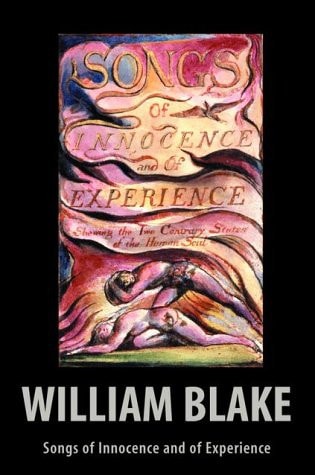
Songs of Innocence and of Experience
0
0
As an Amazon Associate and affiliate partner, Menrva Books earns from qualifying purchases. Learn more
Author Description
Blake was one of the finest craftsmen of his time, an artist for whom art and poetry were inextricably linked. He was an independent and rebellious thinker, who abhorred pretension and falsity in others. His Songs of Innocence are products of this innocent imagination untainted by worldliness, while the Songs of Experience resulted from his feelings of indignation and pity for the sufferings of mankind. Songs of Innocence and of Experience includes some of Blake's finest and best-loved poems, beautifully illustrated by his original art work.
Menrva's Summary
THE PULSE
The collection juxtaposes the uncorrupted state of human perception against the disillusionment born from societal constraints and institutional corruption. Blake presents a dualistic framework where the 'Innocence' poems reflect a pastoral, visionary perspective of childhood and divine harmony, while the 'Experience' poems examine the harsh realities of industrialization, poverty, and religious hypocrisy. The narrative voice shifts between the naive observer and the cynical critic, utilizing symbolic imagery to contrast the purity of the soul with the rigid structures of the adult world. This work functions as a non-linear exploration of the human condition, relying on lyrical rhythm and visual iconography to convey its philosophical arguments.
INSIDE THE PAGES
- Use of contrasting thematic pairs such as 'The Lamb' and 'The Tyger'
- Integration of original hand-colored relief etchings
- Lyrical, ballad-like meter and rhyme schemes
- Symbolic representation of social institutions like the church and state
- Exploration of childhood as a state of spiritual grace
- Critique of industrial-era labor conditions
- Personification of abstract concepts like Pity and Mercy
- Use of visionary and prophetic imagery
THE COLLECTIVE ECHO
Readers and critics frequently analyze the collection as a foundational text of the Romantic movement, noting the intentional tension between the two halves of the work. Discussion often centers on the complexity of Blake's symbolism and how his visual art informs the interpretation of his verse. Scholars highlight the effectiveness of his critique regarding the societal structures of the late eighteenth century, particularly his focus on the loss of individual autonomy. The balance between the melodic simplicity of the early poems and the darker, more biting tone of the later sections remains a primary point of interest for those studying the evolution of poetic form.
Page Count:
226
Publication Date:
2099-11-30
Publisher:
Oxford University Press
ISBN-10:
0192804871
ISBN-13:
9780192804877
Philosophy
Poetry
British literature
Classic Literature
Romanticism
Community Tags
Other Editions(3)

Similar Books