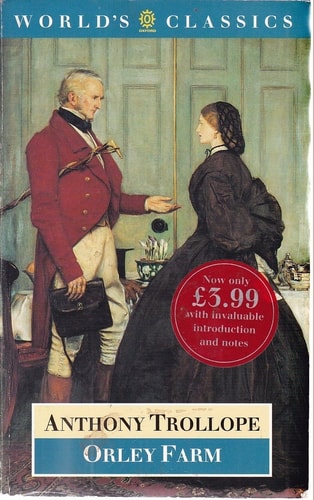
Orley Farm
0
0
As an Amazon Associate and affiliate partner, Menrva Books earns from qualifying purchases. Learn more
Author Description
This story deals with the imperfect workings of the legal system in the trial and acquittal of Lady Mason. Trollope wrote in his Autobiography that his friends considered this "the best I have written".
Menrva's Summary
THE PULSE
The central conflict arises when Lady Mason, a respected widow, faces a legal challenge regarding the validity of her late husband's will, threatening her social standing and her son's inheritance. Lady Mason must navigate the complex and often flawed Victorian legal system while maintaining her composure under the scrutiny of her community. Opposing her are those who suspect her of forgery, forcing her to rely on the support of loyal friends and the machinations of her legal counsel. The narrative framework employs a third-person omniscient perspective, allowing for a broad examination of the social and moral implications of the trial across various strata of society.
INSIDE THE PAGES
- Detailed exploration of Victorian legal procedures and courtroom dynamics
- Examination of moral ambiguity and the consequences of deception
- Satirical commentary on the social hierarchies of the landed gentry
- Multi-layered plot involving inheritance disputes and family secrets
- Focus on the psychological burden of maintaining a public facade
- Integration of romantic subplots that contrast with the central legal tension
- Extensive character studies of both the legal professionals and the accused
- Pacing that emphasizes the slow, deliberate nature of legal proceedings
THE COLLECTIVE ECHO
Readers and critics frequently highlight the novel's meticulous attention to the intricacies of the Victorian legal system and its impact on individual lives. Discussion often centers on the moral complexity of Lady Mason's character, as her actions provoke debate regarding the necessity of deception in a rigid society. Many observers note that the pacing reflects the deliberate, sometimes tedious nature of legal battles, which serves to heighten the tension surrounding the final verdict. The work is widely regarded as a significant example of Trollope's ability to balance social critique with compelling character development. Readers often appreciate the depth of the supporting cast, which provides a comprehensive view of the societal pressures present during the era.
Page Count:
450
Publication Date:
1985-10-31
Publisher:
Oxford University Press
ISBN-10:
0192817132
ISBN-13:
9780192817136
classic
Great Britain
Fiction thrillers
Realism
Legal Drama
Victorian
Social Satire
Community Tags
Other Editions(12)

Independently Published
2018
Default edition
Oxford University Press
2018

CreateSpace Independent Publishing Platform
2018

OUP Oxford
2018
Oxford University Press
2018

Barnes & Noble Press
2017

CreateSpace Independent Publishing Platform
2016

Sellerio Editore Palermo
2013

Sellerio Editore srl
2013
Oxford University Press
1985
Ward Lock
1985

Dover Publications
1981
Similar Books







Reader Comments
Share Your Thoughts
No comments yet. Be the first to share your thoughts!