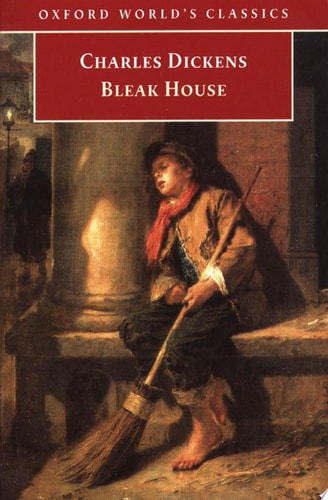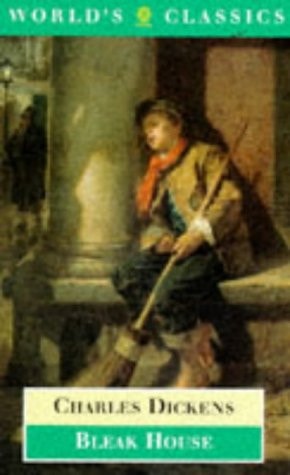
Bleak House
0
0
As an Amazon Associate and affiliate partner, Menrva Books earns from qualifying purchases. Learn more
Author Description
Bleak House, Dickens's most daring experiment in the narration of a complex plot, challenges the reader to make connections--between the fashionable and the outcast, the beautiful and the ugly, the powerful and the victims. Nowhere in Dickens's later novels is his attack on an uncaringsociety more imaginatively embodied, but nowhere either is the mixture of comedy and angry satire more deftly managed.
Menrva's Summary
THE PULSE
The central conflict arises from the protracted and ruinous Chancery lawsuit of Jarndyce and Jarndyce, which ensnares the lives of all who come into contact with it. Esther Summerson, an orphan of uncertain parentage, serves as the primary lens through which the reader observes the sprawling social landscape of Victorian England. She seeks to establish her identity and find stability while navigating a world defined by bureaucratic indifference and systemic inequality. Opposing her and the other characters are the rigid, dehumanizing structures of the legal system and the predatory nature of those who profit from its stagnation. The narrative employs a dual-perspective framework, alternating between Esther's intimate first-person account and an omniscient third-person narrator who provides a broader, more cynical view of the urban environment.
INSIDE THE PAGES
- Dual-narrative structure alternating between first-person and third-person perspectives
- Satirical portrayal of the British legal system and the Court of Chancery
- Extensive cast of characters representing diverse social strata
- Detailed atmospheric descriptions of London fog and urban decay
- Integration of mystery elements regarding the identity of Esther's parents
- Use of caricature to highlight moral failings and institutional corruption
- Complex, interconnected subplots that converge on the central legal case
- Exploration of themes concerning philanthropy, inheritance, and social responsibility
THE COLLECTIVE ECHO
Discussion often centers on the effectiveness of the dual-narrative structure, which critics frequently cite as a sophisticated method for contrasting personal experience with institutional coldness. Readers frequently highlight the dense, atmospheric prose and the sheer scale of the character list as both a challenge and a reward. The balance between the intricate mystery plot and the biting social commentary remains a primary focus for scholars examining the author's critique of Victorian society. Many readers appreciate how the narrative manages to maintain momentum despite the heavy focus on legal proceedings and bureaucratic stagnation. The work is widely regarded as a significant example of the author's ability to synthesize comedy and tragedy within a single, expansive framework.
Page Count:
976
Publication Date:
1996-09-26
Publisher:
Oxford University Press
ISBN-10:
0192829858
ISBN-13:
9780192829856
Mystery
Legal Drama
London England
Victorian
Social Satire
England
Realism
classic