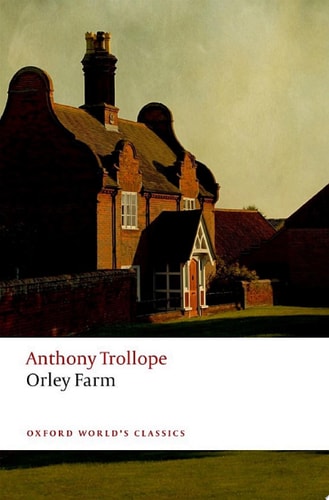
Orley Farm
0
0
As an Amazon Associate and affiliate partner, Menrva Books earns from qualifying purchases. Learn more
Author Description
There was a power of endurance about her, and a courage that was almost awful. Did Lady Mason forge a codicil to her husband's will, allowing Orley Farm to pass to her son or not? Orley Farm centres on this case of forgery, and the anguish and guilt of Lady Mason. Surrounding this enigmatic woman and her apparent crime are her elderly lover, Sir Peregrine Orme; her principled but thoughtless son, Lucius; and, not least, a group of determined lawyers. Orley Farm contains the plot with which Trollope was most pleased. Drawing on family experience of the loss of an inheritance, the novel tackles the tremendous question of property fraud. The result, as George Orwell observed, is one of the most brilliant novels about a law suit in English fiction. Orley Farm dates from a confident period of its author's life. It breathes an air of writerly assurance, with Trollope at the height of his competitiveness with Dickens. In this work Trollope claims the Victorian legal novel as his own.
Menrva's Summary
THE PULSE
The central conflict hinges on the moral and legal consequences of a suspected forgery involving a contested inheritance at Orley Farm. Lady Mason, a woman of complex character, faces the potential exposure of a crime that would strip her son of his property and destroy her social standing. The narrative follows her interactions with Sir Peregrine Orme, her son Lucius, and the legal professionals tasked with uncovering the truth. Trollope employs a third-person omniscient perspective to examine the psychological weight of guilt and the rigid structures of Victorian law. The story unfolds through a series of social and courtroom maneuvers that test the integrity of all involved parties.
INSIDE THE PAGES
- Examination of the Victorian legal system and property law
- Exploration of moral ambiguity and the nature of guilt
- Detailed character studies of the landed gentry
- Focus on social reputation and public perception
- Interweaving of domestic life and professional duty
- Satirical observations on the legal profession
- Pacing that emphasizes procedural detail and social interaction
- Realistic dialogue reflecting class distinctions
THE COLLECTIVE ECHO
Readers and critics frequently highlight the novel as a pinnacle of Trollope's ability to balance intricate legal plotting with profound character development. Discussion often centers on the moral complexity of Lady Mason, whose actions provoke varied interpretations regarding her culpability and the necessity of her deception. The narrative is noted for its atmospheric depiction of Victorian society and the author's confident, steady prose style. Many observers appreciate the meticulous construction of the courtroom scenes, which serve as a centerpiece for the broader thematic exploration of inheritance and fraud. The work remains a significant point of reference for those interested in the evolution of the legal novel within the nineteenth-century canon.
Page Count:
752
Publication Date:
2018-01-01
Publisher:
OUP Oxford
ISBN-10:
0192525646
ISBN-13:
9780192525642
History
Realist
classic
Victorian
England
Fiction thrillers
Legal
Indigenous
Great Britain
Domestic
Social Commentary
19th Century
Community Tags
Other Editions(12)

Independently Published
2018
Default edition
Oxford University Press
2018

CreateSpace Independent Publishing Platform
2018
OUP Oxford
2018
Oxford University Press
2018

Barnes & Noble Press
2017
CreateSpace Independent Publishing Platform
2016

Sellerio Editore Palermo
2013

Sellerio Editore srl
2013
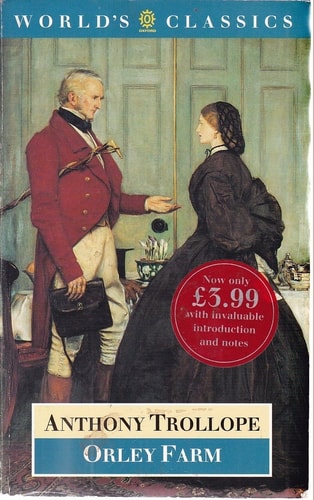
Oxford University Press
1985
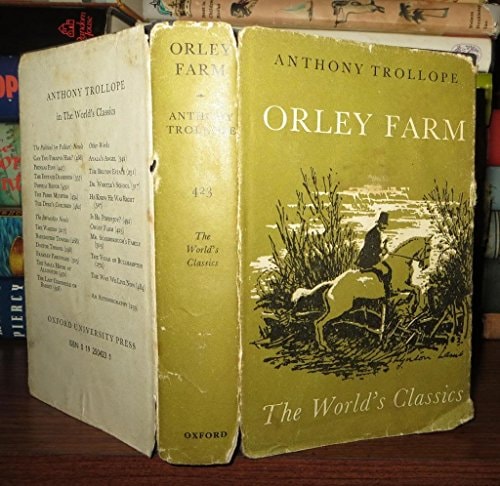
Ward Lock
1985

Dover Publications
1981
Similar Books

Reader Comments
Share Your Thoughts
No comments yet. Be the first to share your thoughts!