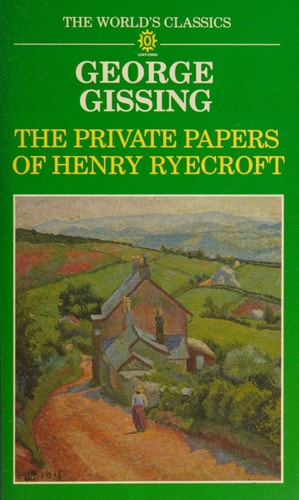
The Private Papers of Henry Ryecroft
0
0
As an Amazon Associate and affiliate partner, Menrva Books earns from qualifying purchases. Learn more
Author Description
This is the novel that George Gissing prized above everything else he wrote. Published in 1903, the year of Gissing's death, it crosses and re-crosses a precarious line between fiction and autobiography. For readers now, the novel's fascination lies in its portrait of a man coping with disillusionment and bitterness at literary failure, who in fact has produced a masterpiece that defies classification.
Menrva's Summary
THE PULSE
A struggling writer finds unexpected solace and reflection after receiving a modest legacy that allows him to retire to the English countryside. The protagonist, Henry Ryecroft, navigates the transition from a life of urban poverty and literary frustration to one of quiet contemplation in Devon. His objective is to reconcile his past failures with his present tranquility, while the primary forces opposing him are his own lingering bitterness, the physical decline of his health, and the memory of the societal pressures that once constrained his creative spirit. The narrative framework is presented as a collection of personal papers, organized into four seasons, which function as a series of meditative essays on life, literature, and the nature of contentment.
INSIDE THE PAGES
- Epistolary-style journal entries
- Seasonal structural division
- Introspective philosophical monologues
- Detailed descriptions of rural English landscapes
- Commentary on the Victorian literary marketplace
- Exploration of poverty and social class
- Meditations on the passage of time
- Character study of a disillusioned intellectual
THE COLLECTIVE ECHO
Discussion often centers on the blurred boundaries between Gissing's own life and the fictionalized experiences of his protagonist. Readers frequently highlight the serene, atmospheric prose that contrasts sharply with the author's earlier, more naturalistic works. Critics often note that the book serves as a poignant examination of the psychological toll of professional failure and the eventual acceptance of a modest existence. The pacing is intentionally slow and reflective, prioritizing internal character development over external plot progression. Many readers find the work to be a thoughtful meditation on the value of solitude and the pursuit of intellectual independence in a demanding world.
Page Count:
240
Publication Date:
1987-08-27
Publisher:
Oxford University Press
ISBN-10:
0192817493
ISBN-13:
9780192817495
Literary Fiction
Philosophical
Short Stories
Classic Literature
Autobiographical fiction
Community Tags
Other Editions(13)

Creative Media Partners, LLC
2022
Default edition
Mint Editions
2021

Amazon Digital Services LLC - KDP Print US
2017

CreateSpace Independent Publishing Platform
2017

CreateSpace Independent Publishing Platform
2016
Creative Media Partners, LLC
2016

Creative Media Partners, LLC
2015
Creative Media Partners, LLC
2015

CreateSpace Independent Publishing Platform
2014

IndyPublish.com
2002
Oxford University Press
1987
Dutton
1903
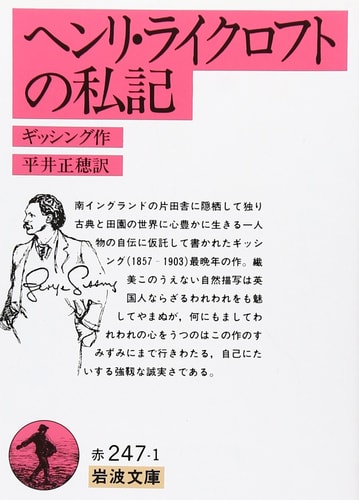
Iwanami Shoten
1900
Similar Books


Reader Comments
Share Your Thoughts
No comments yet. Be the first to share your thoughts!