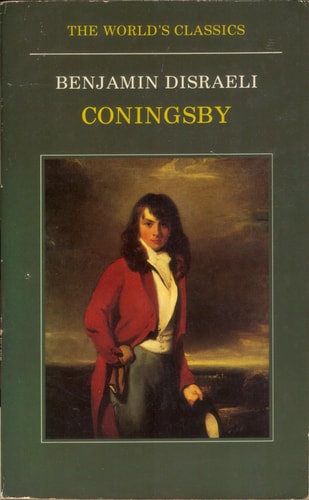
Coningsby
0
0
As an Amazon Associate and affiliate partner, Menrva Books earns from qualifying purchases. Learn more
Author Description
"This grandfather of mine is a great prince," thought Coningsby, as musing he stood before a portrait in which he recognised the features of the being from whom he had so recently and so strangely parted. There he stood, Philip Augustus, Marquess of Monmouth, in his robes of estate, with his new coronet on a table near him, a despatch lying at hand that indicated the special mission of high ceremony of which he had been the illustrious envoy, and the garter beneath his knee.
Menrva's Summary
THE PULSE
Harry Coningsby, an orphaned youth of noble birth, navigates the complex social and political hierarchies of 19th-century England while seeking to define his own identity independent of his powerful grandfather.
Coningsby moves through the elite circles of Eton and Cambridge, encountering various ideological factions that shape his understanding of the nation's future. He faces pressure to conform to the rigid expectations of the aristocracy, represented by the Marquess of Monmouth, while simultaneously developing a nascent political consciousness. The narrative follows his transition from a sheltered student to an active participant in the Young England movement, highlighting the friction between traditional Toryism and the emerging industrial realities of the era. The story is presented through a third-person omniscient perspective that frequently pauses to analyze the socio-political climate of the time.
INSIDE THE PAGES
- Exploration of the Young England political movement
- Detailed depictions of aristocratic life and social customs
- Examination of the influence of industrialization on British society
- Focus on the development of political ideology in youth
- Satirical portrayal of the political establishment
- Use of historical figures and events as narrative anchors
- Emphasis on the importance of tradition versus reform
- Complex character dynamics within the British peerage
THE COLLECTIVE ECHO
Readers and critics often identify this work as a significant example of the political novel, noting its focus on the ideological shifts of the Victorian era. Discussion frequently centers on the author's ability to blend personal character development with broader commentary on the state of the British government. Many observers highlight the prose as dense and highly descriptive, reflecting the formal style common to the period. The balance between the protagonist's personal growth and the heavy political discourse is a common point of analysis for those studying 19th-century literature. Readers often appreciate the work for its historical context, even as they acknowledge the specific, dated nature of its political arguments.
Page Count:
582
Publication Date:
1982-08-26
Publisher:
Oxford University Press
ISBN-10:
0192815806
ISBN-13:
9780192815804
Classic Literature
Social Commentary
Bildungsroman
Politicians fiction
Great Britain
Victorian
Political fiction