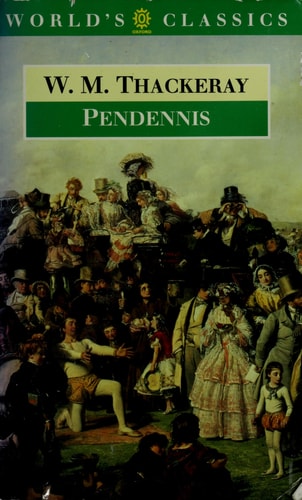
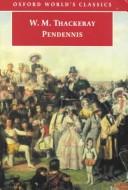
The History of Pendennis: His Fortunes and Misfortunes, His Friends and His Greatest Enemy
0
0
As an Amazon Associate and affiliate partner, Menrva Books earns from qualifying purchases. Learn more
Author Description
One of the earliest and greatest of the Victorian Bildungsroman, this introspective novel treats London's bohemian and literary underworld and the romantic entanglements of its hero, Arthur Pendennis, with comic and uninhibited style. Son of a selfless widow, Pendennis moves from one disastrous romantic involvement to another on the fringes of the corrupt upper classes. Thackeray had slaved for ten years in this literary bohemia; the introduction considers the parallels between Thackeray's life and the novel, and examines the changes taking place in Victorian England throughout the years of the story.
Menrva's Summary
THE PULSE
Arthur Pendennis navigates the precarious transition from provincial youth to the complex social and literary landscapes of Victorian London. Following the death of his father, Arthur Pendennis relies on his devoted mother while attempting to establish his identity amidst the temptations of high society and the bohemian literary circles of the city. He faces a series of romantic entanglements and moral dilemmas that test his character and social standing. The narrative employs a third-person omniscient perspective to observe the protagonist's growth and the various figures who influence his trajectory. The world is defined by the rigid class structures and shifting economic realities of nineteenth-century England.
INSIDE THE PAGES
- Exploration of the Victorian literary underworld
- Satirical examination of the upper classes
- Focus on the transition from adolescence to adulthood
- Use of an omniscient narrator to provide social commentary
- Detailed depiction of provincial versus urban life
- Integration of romantic subplots as catalysts for character development
- Emphasis on the influence of maternal figures
- Realistic portrayal of financial and social instability
THE COLLECTIVE ECHO
Readers and critics frequently identify this work as a significant example of the Victorian Bildungsroman, noting its balance of humor and social critique. Discussion often centers on the parallels between the protagonist's experiences and the author's own history within the literary bohemia of London. Many observers highlight the effectiveness of the narrative voice, which manages to be both intimate and detached while dissecting the moral failings of the era. The pacing is often described as deliberate, allowing for a thorough examination of character motivations and the broader societal changes occurring during the period. Readers appreciate the depth of the character development, which avoids simple archetypes in favor of more nuanced portrayals of human fallibility.
Page Count:
1120
Publication Date:
1994-08-18
Publisher:
Oxford University Press
ISBN-10:
0192831682
ISBN-13:
9780192831682
Historical Fiction
Satire
Victorian
Classic Literature
England
Bildungsroman
Community Tags
Other Editions(3)
Similar Books