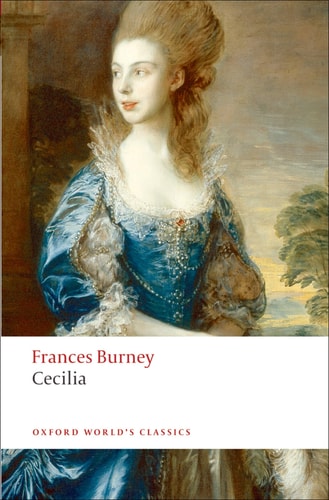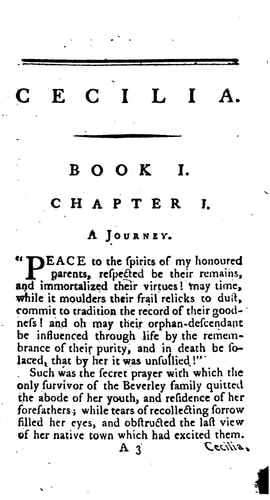
Cecilia, or Memoirs of an Heiress
0
0
As an Amazon Associate and affiliate partner, Menrva Books earns from qualifying purchases. Learn more
Author Description
Cecilia is an heiress, but she can only keep her fortune if her husband will consent to take her surname. Fanny Burney's unusual love story and deft social satire was much admired on its first publication in 1782 for its subtle interweaving of comedy, humanity and social analysis.
Menrva's Summary
THE PULSE
Cecilia Beverley faces a restrictive inheritance clause that mandates her future husband must adopt her surname to secure her fortune. As a young woman of independent means, Cecilia navigates the complex social hierarchies of 18th-century London while attempting to reconcile her personal desires with the rigid expectations of her guardians and suitors. The narrative follows her struggle against societal pressures, financial manipulation, and the conflicting interests of those surrounding her. Presented through a third-person perspective, the novel examines the constraints placed upon women of the era and the logical consequences of social ambition.
INSIDE THE PAGES
- Detailed exploration of 18th-century social etiquette and class dynamics
- Satirical portrayal of the London aristocracy and social climbers
- Complex character development centered on the protagonist's moral growth
- Use of epistolary elements and formal prose typical of the period
- Focus on the legal and financial vulnerabilities of women in the 1700s
- Intricate plot involving multiple suitors and conflicting familial interests
- Balanced integration of comedic situations and serious social commentary
- Examination of the tension between individual autonomy and societal duty
THE COLLECTIVE ECHO
Readers and critics frequently highlight the novel's sharp social observation and the psychological depth of its protagonist. Discussion often centers on the effectiveness of Burney's satire in exposing the hypocrisy of the landed gentry and the precarious position of women regarding property rights. Many observers note the balance between the intricate, often frustrating plot developments and the underlying humanity of the characters. The work is widely recognized for its influence on later novelists, particularly Jane Austen, who drew inspiration from Burney's style and thematic focus. Readers appreciate the detailed world-building that captures the atmosphere of the late 18th century with precision and wit.
Page Count:
1056
Publication Date:
1988-09-08
Publisher:
Oxford University Press
ISBN-10:
0192817426
ISBN-13:
9780192817426
Historical Fiction
Romance
18th century
Young women
Social Satire
Classic Literature
England