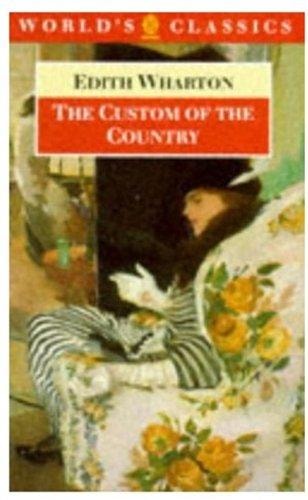
The Custom of the Country
0
0
As an Amazon Associate and affiliate partner, Menrva Books earns from qualifying purchases. Learn more
Author Description
Edith Wharton's satiric anatomy of American society in the first decade of the twentieth century both appalled and fascinated its first reviewers, and established her as a major novelist. Custom of the Country follows the career of Undine Spragg, recently arrived in New York from the midwest and determined to conquer high society. Glamorous and selfish, mercenary and manipulative, her principal assets are her striking beauty, her tenacity, and her father's money. With her sights set on an advantageous marriage, Udine pursues her schemes in a world of shifting values, where triumph is swiftly followed by disillusion. The novel superbly captures post-Civil War America, a country where the ruthlessness of business leaders and politicians was matched by that of society's aspirants.
Menrva's Summary
THE PULSE
Undine Spragg, a social climber from the Midwest, attempts to navigate and dominate the rigid hierarchies of New York high society through a series of calculated marriages. Driven by an insatiable desire for status and material wealth, Undine utilizes her beauty and her father's financial resources to infiltrate elite circles. She faces opposition from established socialites who view her as an outsider and from the consequences of her own impulsive, mercenary decisions. The narrative is presented through a third-person omniscient perspective that exposes the internal motivations of the characters while maintaining a critical distance from their social maneuvers. The world is defined by the strict, often hypocritical codes of Gilded Age society, where financial stability and social standing are the primary metrics of success.
INSIDE THE PAGES
- Sharp social satire targeting the American upper class
- Detailed examination of the intersection between marriage and commerce
- Character-driven narrative focusing on the protagonist's moral vacuity
- Exploration of the clash between Midwestern values and New York aristocracy
- Use of irony to highlight the disparity between social appearance and reality
- Pacing that mirrors the relentless, often exhausting nature of social ambition
- Vivid depiction of early twentieth-century domestic and social settings
- Critical commentary on the commodification of personal relationships
THE COLLECTIVE ECHO
Readers and critics frequently describe this work as a biting and unsentimental critique of the American dream during the Gilded Age. Discussion often centers on the character of Undine Spragg, who is widely analyzed as one of the most complex and unapologetic anti-heroines in literature. Many readers highlight the precision of the prose and the effectiveness of the author's social commentary, noting that the pacing remains consistent despite the lack of traditional heroic arcs. The novel is often praised for its ability to maintain relevance through its exploration of ambition, greed, and the shifting values of a society in transition. Critics emphasize that the balance between character development and social critique is maintained throughout the narrative, providing a comprehensive look at the era's cultural landscape.
Page Count:
410
Publication Date:
1995-03-30
Publisher:
Oxford University Press
ISBN-10:
0192822888
ISBN-13:
9780192822888
Historical Fiction
New York
Social Satire
American
Divorced people fiction
Realism
Classic Literature
Paris France
Community Tags
Other Editions(42)
Blackstone Publishing, Inc.
2022
Default edition
Independently Published
2021

Independently Published
2020
Independently Published
2020

Independently Published
2020
Independently Published
2020

Digireads.com Publishing
2018

CreateSpace Independent Publishing Platform
2018

Creative Media Partners, LLC
2018
CreateSpace Independent Publishing Platform
2017
CreateSpace Independent Publishing Platform
2017

CreateSpace Independent Publishing Platform
2017

CreateSpace Independent Publishing Platform
2017

CreateSpace Independent Publishing Platform
2017

CreateSpace Independent Publishing Platform
2016
CreateSpace Independent Publishing Platform
2016
Creative Media Partners, LLC
2015
Creative Media Partners, LLC
2015
Creative Media Partners, LLC
2015
Creative Media Partners, LLC
2015
Creative Media Partners, LLC
2015

Hesperus Press
2015
Open Road Integrated Media, Inc.
2015
CreateSpace Independent Publishing Platform
2014

CreateSpace Independent Publishing Platform
2013
CreateSpace Independent Publishing Platform
2013

The Floating Press
2011
Read Books
2009

Penguin Group USA, Inc.
2009

Random House Digital Inc.
2007

Little, Brown Book Group Limited
2007

Penguin Books
2006

IndyPublish.com
2005
Kessinger Publishing
2004
Barnes & Noble World Digital Library
2003

Classic Books
2001
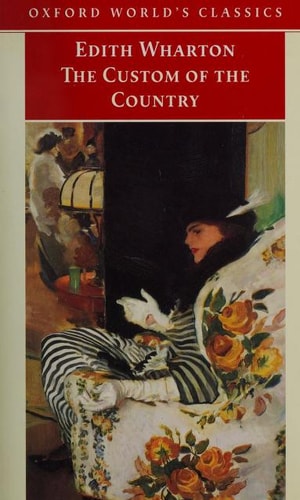
Oxford University Press
2001

Barnes & Noble Books
2000

Classic Books
1998
Oxford University Press
1995
Scribner Paper Fiction
1987

Telegraph Books
1986
Similar Books
Reader Comments
Share Your Thoughts
No comments yet. Be the first to share your thoughts!