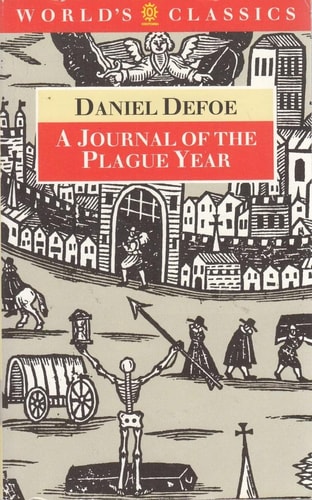
A Journal of the Plague Year
0
0
As an Amazon Associate and affiliate partner, Menrva Books earns from qualifying purchases. Learn more
Author Description
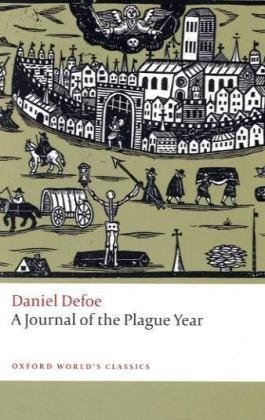
Long considered the most compelling account of natural disaster in all of literature, Defoe's classic reconstruction of the Great Plague of 1665 scans the streets and alleyways of stricken London in an effort to record the extreme suffering of plague victims. At once horrifying and movingly compassionate, A Journal of the Plague Year offers a nightmare vision of the modern city laid to waste.
Menrva's Summary
THE PULSE
A man navigates the desolate streets of 1665 London as the bubonic plague ravages the city, forcing him to document the collapse of social order and the mounting death toll. The narrator, a saddler living in the city, attempts to reconcile his desire to flee with his compulsion to witness the unfolding catastrophe. He moves through a landscape defined by locked doors, red crosses painted on homes, and the constant presence of death. The narrative framework is presented as a personal journal, utilizing a pseudo-documentary style that prioritizes observation and statistical reporting over traditional character arcs.
INSIDE THE PAGES
- First-person observational narrative style
- Detailed descriptions of urban quarantine measures
- Inclusion of historical bills of mortality and statistical data
- Episodic structure reflecting the progression of the epidemic
- Focus on the psychological impact of isolation and fear
- Vivid depictions of the social stratification during crisis
- Realistic portrayal of 17th-century London geography
- Moral and religious reflections on the nature of suffering
THE COLLECTIVE ECHO
Readers and critics frequently highlight the work's uncanny ability to mimic the tone of a factual report, often leading early readers to believe it was a genuine historical document. Discussion often centers on the tension between the narrator's clinical detachment and the visceral horror of the events he describes. The pacing is noted for its deliberate, methodical progression, which mirrors the slow, inexorable spread of the disease throughout the city. Many observers appreciate the text for its atmospheric density and its role as a foundational piece of realistic fiction. The book remains a subject of study for its innovative use of narrative voice to ground speculative history in tangible reality.
Page Count:
336
Publication Date:
1990-10-25
Publisher:
Oxford University Press
ISBN-10:
0192826824
ISBN-13:
9780192826824
Historical Fiction
Epidemic
classic
England
London England
17th Century
London
Community Tags
Other Editions(34)

Lushena Books
2026
Default edition
First Avenue Editions
2022

Mint Editions
2021

Independently Published
2020

Independently Published
2020

HarperCollins Publishers
2020

Eternal Chrysostom LLC
2020

Auroch Press Limited
2020

Independently Published
2020
Mint Editions
2020
Independently Published
2020

Auroch Press, Publishers
2020
Amazon Digital Services LLC - KDP Print US
2018
CreateSpace Independent Publishing Platform
2018

CreateSpace Independent Publishing Platform
2018

CreateSpace Independent Publishing Platform
2018
CreateSpace Independent Publishing Platform
2018

CreateSpace Independent Publishing Platform
2018

CreateSpace Independent Publishing Platform
2018

CreateSpace Independent Publishing Platform
2018

CreateSpace Independent Publishing Platform
2018

CreateSpace Independent Publishing Platform
2017

CreateSpace Independent Publishing Platform
2017

CreateSpace Independent Publishing Platform
2017

CreateSpace Independent Publishing Platform
2017

CreateSpace Independent Publishing Platform
2016

CreateSpace Independent Publishing Platform
2016

CreateSpace Independent Publishing Platform
2016

CreateSpace Independent Publishing Platform
2014

CreateSpace Independent Publishing Platform
2013

Wilder Publications, LCC
2012
Oxford University Press
2010
Oxford University Press
2009
Oxford University Press
1990
Similar Books








Reader Comments
Share Your Thoughts
No comments yet. Be the first to share your thoughts!