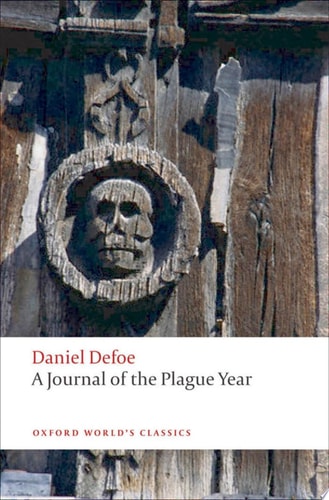
A Journal of the Plague Year
0
0
As an Amazon Associate and affiliate partner, Menrva Books earns from qualifying purchases. Learn more
Author Description
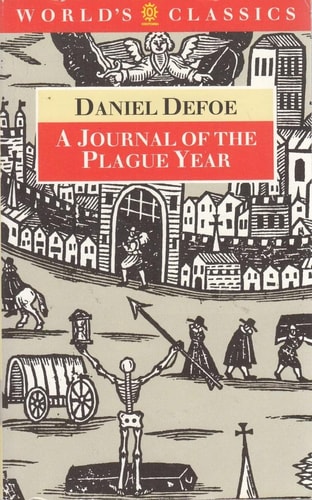
Defoe's Journal of the Plague Year is an extraordinary account of the devastation and human suffering inflicted on the city of London by the Great Plague of 1665. Purporting to be an eye-witness, Defoe's fictional narrator recounts in vivid detail the rising death toll and the transformation of the city as its citizens flee and those who remain live in fear and despair. Above all it is the stories of appalling human suffering and grief that give Defoe's extraordinary fiction its compelling historical veracity. The lively Introduction relates the Journal to Defoe's best-known work, Robinson Crusoe, and draws on recent research into the publishing environment of the first edition. It considers the portrayal of London, depicted by Defoe as it was before the Great Fire, and to the book's device of fiction masquerading as fact. This edition also includes comprehensive explanatory notes, a map of Defoe's London, and a complete topographical index that enables the reader to track the Journal's complex references to London's streets, churches, alleyways, and prisons both before and after the Great Fire of 1666.About the Series: For over 100 years Oxford World's Classics has made available the broadest spectrum of literature from around the globe. Each affordable volume reflects Oxford's commitment to scholarship, providing the most accurate text plus a wealth of other valuable features, including expert introductions by leading authorities, voluminous notes to clarify the text, up-to-date bibliographies for further study, and much more.
Menrva's Summary
THE PULSE
A man navigates the harrowing social and physical collapse of London during the 1665 Great Plague outbreak. The narrator, a saddler living in the city, documents the rapid spread of the disease and the subsequent breakdown of civic order. He observes the implementation of quarantine measures, the flight of the wealthy, and the grim reality of mass burials. The narrative framework utilizes a pseudo-documentary style, blending personal observation with statistical records to create a sense of immediate, lived experience.
INSIDE THE PAGES
- First-person perspective providing an intimate view of urban decay
- Detailed descriptions of quarantine protocols and city ordinances
- Statistical tables documenting the weekly death toll
- Vivid accounts of the psychological impact of isolation and fear
- Topographical references to 17th-century London streets and landmarks
- Exploration of the tension between religious fatalism and scientific inquiry
- Use of fictionalized reportage to establish historical authenticity
- Examination of the socioeconomic disparities during public health crises
THE COLLECTIVE ECHO
Readers frequently highlight the uncanny realism of the prose, which often leads audiences to mistake the work for a genuine historical document. Discussion often centers on Defoe's ability to maintain a clinical, detached tone while describing scenes of profound human tragedy. Critics emphasize the effectiveness of the world-building, noting how the specific references to London geography ground the narrative in a tangible reality. The work is widely studied for its innovative use of fiction masquerading as fact, serving as a foundational example of the early English novel's capacity for verisimilitude.
Page Count:
265
Publication Date:
2010-10-21
Publisher:
Oxford University Press
ISBN-10:
0199572836
ISBN-13:
9780199572830
Fiction
London England
English & College Success
Historical
English
classic
17th Century
London
England
Community Tags
Similar Books