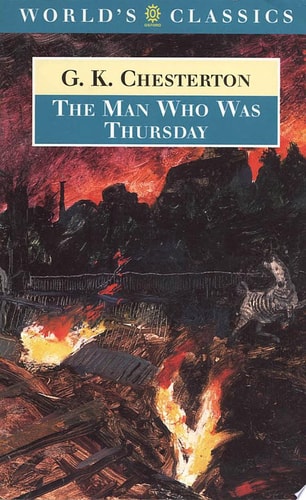
The Man Who Was Thursday
0
0
As an Amazon Associate and affiliate partner, Menrva Books earns from qualifying purchases. Learn more
Author Description
Widely considered as Chesterton's masterpiece, The Man Who Was Thursday (1908) defies classification. Drawing on contemporary fears of anarchist conspiracies and bomb outrages, this text is firmly rooted in its time and place--turn of the century London--but it also defies temporal boundaries. This critical edition includes several short related pieces, A Picture of Tuesday, Introduction to the Book of Job, and The Diabolist, as well as a map of contemporary London and detailed explanatory notes.
Menrva's Summary
THE PULSE
Gabriel Syme, a poet and undercover detective, infiltrates a council of seven anarchists who each adopt the name of a day of the week. Syme finds himself elected as 'Thursday' and must navigate a labyrinthine conspiracy where the lines between law enforcement and subversion blur. As he attempts to dismantle the organization from within, he discovers that his fellow anarchists are not what they appear to be. The narrative follows a surreal, dream-like progression through London, challenging the protagonist's perception of reality and authority.
INSIDE THE PAGES
- Surrealist narrative structure
- Philosophical dialogue on order and chaos
- Satirical depiction of turn-of-the-century anarchist movements
- First-person perspective shifts
- Allegorical character archetypes
- Dream-logic pacing
- Exploration of theological and existential themes
- Atmospheric urban setting
THE COLLECTIVE ECHO
Discussion often centers on the book's unique blend of detective fiction and metaphysical inquiry. Readers frequently highlight the disorienting, dream-like atmosphere that permeates the narrative, which serves to amplify the philosophical questions posed by the author. Critics often note the balance between the fast-paced, thriller-like plot and the underlying theological debates regarding the nature of evil and divine order. The work is frequently analyzed for its commentary on the anxieties of the early twentieth century, specifically regarding political radicalism and social stability. Many readers find the conclusion particularly provocative, as it shifts the tone from a standard mystery to a profound meditation on human existence.
Page Count:
240
Publication Date:
1996-11-21
Publisher:
Oxford University Press
ISBN-10:
0192823590
ISBN-13:
9780192823595
Mystery
Satire
classic
England
Surrealism
Political Thriller
London England
Philosophical
Mystery fiction
Community Tags
Other Editions(36)
Murine Publications LLC
2025
Default edition
BoD - Books on Demand
2023

Sanage Publishing House Llp
2022
Sanage Publishing House Llp
2021

Independently Published
2021

Independently Published
2021
Amazon Digital Services LLC - KDP Print US
2018

Independently Published
2018

Amazon Digital Services LLC - KDP Print US
2018

CreateSpace Independent Publishing Platform
2018
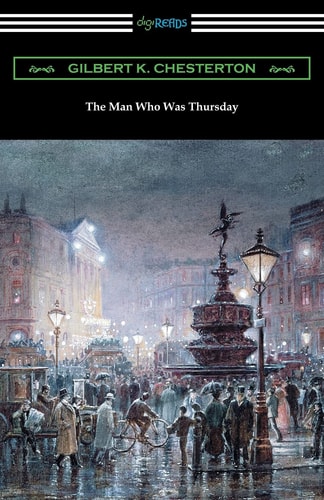
Digireads.com
2018

Max Bollinger
2018
CreateSpace Independent Publishing Platform
2018
CreateSpace Independent Publishing Platform
2018

CreateSpace Independent Publishing Platform
2018

CreateSpace Independent Publishing Platform
2018

CreateSpace Independent Publishing Platform
2017

CreateSpace Independent Publishing Platform
2015

CreateSpace Independent Publishing Platform
2015

Wildwood Publishing
2015
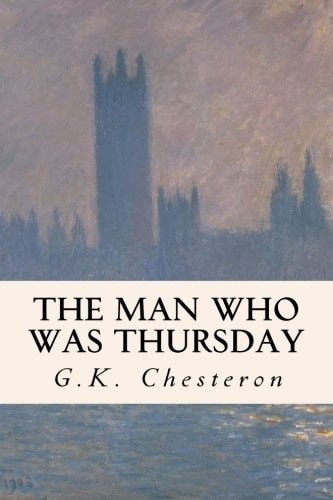
CreateSpace Independent Publishing Platform
2014

CreateSpace Independent Publishing Platform
2014

CreateSpace Independent Publishing Platform
2014
CreateSpace Independent Publishing Platform
2014
Whitaker House
2014

CreateSpace Independent Publishing Platform
2013

Classic Books
2013
CreateSpace Independent Publishing Platform
2012
Tutis Digital Publishing Pvt. Limited
2008

Tutis Digital Publishing Pvt. Limited
2008

Echo Library
2006

Ignatius Press
2004

Classic Books
2001
Transaction Publishers
1999
Oxford University Press
1996

Carroll & Graf
1986
Similar Books


Reader Comments
Share Your Thoughts
No comments yet. Be the first to share your thoughts!