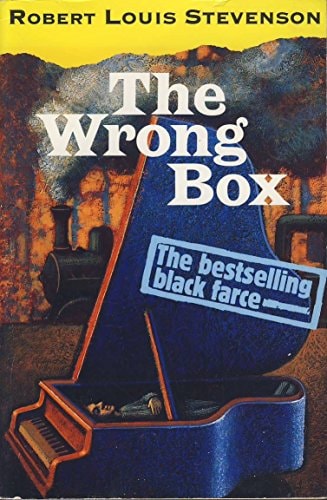
The Wrong Box
0
0
As an Amazon Associate and affiliate partner, Menrva Books earns from qualifying purchases. Learn more
Author Description
The Wrong Box (1889) is one of Stevenson's strangest works. Written with his stepson Lloyd Osborne, it is a masterpiece of black comedy, turning on mistaken identity, the disappearance of a corpse, and several makeshift coffins. V.S. Pritchett described it as "a farce that slips down the throat with the nicety of an oyster," and, according to E.F. Benson, it is "perhaps the most superb extravaganza in the language." In this intriguing work, the Finsbury family has long been involved in a Tontine--a scheme in which subscribers invest money in a fund which them falls to the last survivor. Now there are only two aged uncles between Morris and John Finsbury and their fortune. A railway accident appears to dispose of one, and then the farce begins. In this eccentric and brilliantly plotted story, the authors not only extended the boundaries of good taste, but also satirized the popular Railway Novel genre, perplexing many Victorian readers.
Menrva's Summary
THE PULSE
The sudden death of an uncle in a railway accident triggers a chaotic scramble for a Tontine fortune, forcing the surviving heirs into a series of increasingly desperate and absurd maneuvers to conceal the truth. The narrative follows the Finsbury brothers, Morris and John, as they navigate the logistical nightmare of transporting a corpse while attempting to secure their inheritance. Their objective is complicated by the rigid social expectations of the Victorian era and the constant threat of discovery by rivals and authorities. The story utilizes a third-person perspective to highlight the irony of the characters' predicament, emphasizing the physical comedy inherent in their attempts to hide the body in various makeshift coffins.
INSIDE THE PAGES
- Satirical critique of the Victorian Railway Novel genre
- Complex plot centered on mistaken identity and inheritance schemes
- Use of black comedy to address morbid subject matter
- Exploration of greed and familial rivalry
- Fast-paced, farcical narrative structure
- Detailed depiction of late 19th-century social conventions
- Collaborative writing style between Stevenson and Osbourne
- Focus on the absurdity of bureaucratic and legalistic systems
THE COLLECTIVE ECHO
Readers and critics frequently identify this work as a departure from Stevenson's more serious adventure novels, noting its sharp wit and unconventional tone. Discussion often centers on the authors' ability to maintain a high-energy, farcical pace while navigating the macabre premise of the missing corpse. Many observers highlight the book's role as a satire of the popular literature of its time, noting how it challenged the boundaries of Victorian taste. The balance between the intricate plot mechanics and the eccentric characterizations remains a primary point of interest for those examining the evolution of comedic fiction. Readers often appreciate the dry, cynical humor that permeates the narrative, making it a distinct entry in the authors' combined bibliography.
Page Count:
192
Publication Date:
1995-12-14
Publisher:
Oxford University Press
ISBN-10:
0192824260
ISBN-13:
9780192824264
Mystery
Humor
Satire
Victorian
classic
Black Comedy
Community Tags
Other Editions(12)

Creative Media Partners, LLC
2025
Default edition
Creative Media Partners, LLC
2022

Independently Published
2021

Independently Published
2021

Independently Published
2020
CreateSpace Independent Publishing Platform
2018

CreateSpace Independent Publishing Platform
2017

Hesperus Press
2015

Serenity Publishers, LLC
2009
Dodo Press
2006
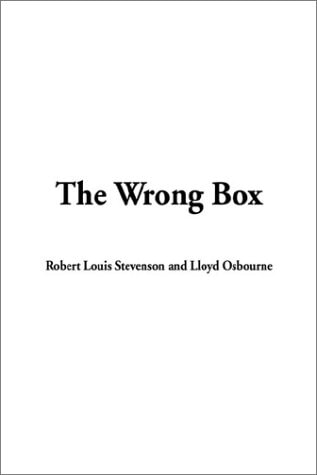
IndyPublish.com
2002
Oxford University Press
1995
Similar Books

Reader Comments
Share Your Thoughts
No comments yet. Be the first to share your thoughts!