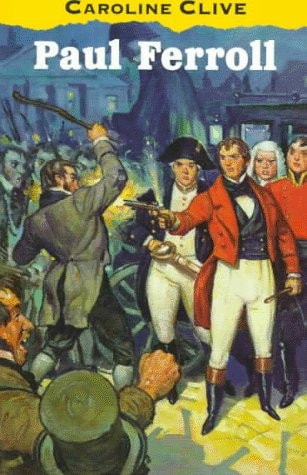
Paul Ferroll
0
0
As an Amazon Associate and affiliate partner, Menrva Books earns from qualifying purchases. Learn more
Author Description
Paul Ferroll, a scandalous success when it first published in 1855, shocked contemporary opinion with its moral ambiguity and authorial detachment, and its refusal of traditional fictional values.The hero, Paul Ferroll, is the embodiment of the English notion of what constitutes a gentleman: handsome, a devoted husband, and community leader. His neighbors admire his selflessness during a cholera epidemic and his bravery in controlling a violent mob by killing the ring-leader. They admire his beautiful wife and daughter, and his brilliant literary reputation. There is one problem, however. Ferroll brutally murdered his first wife in order to marry his second. Out of print for sixty years, Paul Ferroll is certainly a highly unusual Victorian crime novel by an intriguing authoress.
Menrva's Summary
THE PULSE
The narrative centers on the moral dissonance of Paul Ferroll, a respected gentleman who maintains a facade of virtue while concealing the brutal murder of his first wife. Ferroll occupies a position of high social standing, defined by his intellect, community leadership, and domestic devotion. His objective is to preserve his status and family life, a goal that stands in direct opposition to the hidden reality of his past violence. The narrative framework employs a detached, observational tone that challenges the reader to reconcile the protagonist's public benevolence with his private criminality. The world is constrained by the rigid social expectations of Victorian England, where reputation serves as the primary currency of existence.
INSIDE THE PAGES
- Examination of moral ambiguity in the Victorian gentleman archetype
- Use of authorial detachment to frame criminal behavior
- Subversion of traditional Victorian narrative values
- Focus on the psychological duality of the protagonist
- Exploration of social reputation versus private reality
- Integration of historical context regarding class and community leadership
- Pacing that emphasizes character study over conventional suspense
- Critical commentary on the nature of justice and societal perception
THE COLLECTIVE ECHO
Discussion often centers on the unconventional nature of the protagonist, who defies the typical moral trajectory found in nineteenth-century literature. Readers frequently highlight the author's clinical, detached prose as a significant departure from the sentimental style prevalent during the period. Critics often note that the book functions as an early psychological study of a criminal mind, focusing more on the internal justification of the character than on the mechanics of the investigation. The work is frequently cited for its ability to provoke discomfort by forcing the reader to engage with a murderer who is simultaneously portrayed as a pillar of his community. This balance between social critique and character-driven narrative remains the primary focus of modern analysis.
Page Count:
214
Publication Date:
1997-07-10
Publisher:
Oxford University Press
ISBN-10:
0192832476
ISBN-13:
9780192832474
Mystery
Crime
Psychological Thriller
Victorian
England
Man-woman relationships
Classic Literature