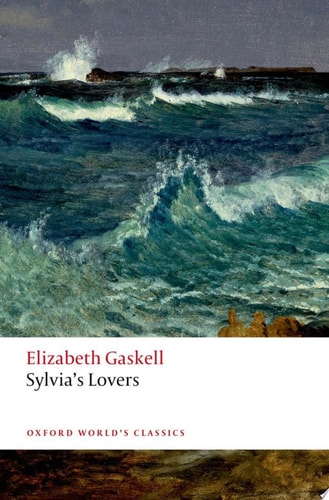
Sylvia's Lovers
0
0
As an Amazon Associate and affiliate partner, Menrva Books earns from qualifying purchases. Learn more
Author Description
'He's spoilt my life,- he's spoilt it for as long as iver I live on this earth' The compelling story of an ordinary girl's tragic passion for a man who disappears, Sylvia's Lovers (1863) is Elizabeth Gaskell's last completed novel. Set in a fictional Whitby at the end of the eighteenth century, the novel is a modern revenge tragedy in which well-intentioned actions have unforeseen and terrible human consequences. Sylvia is loved by two men, her serious cousin Philip and the charismatic sailor Charley Kinraid. When one of them betrays her, her path in life seems fixed. Against the backdrop of the Napoleonic wars and the ever-present threat of press-gangs, the story darkens when Sylvia's father is roused into vengeful violence. But this trouble proves only the precursor to a greater calamity that will radically alter Sylvia's future. Gaskell's novel, richly engaging with the legacy of the Brontë sisters, is her most extensive literary exploration of the tragic depths of unregarded, unhistoric, but vividly imagined lives.
Menrva's Summary
THE PULSE
Sylvia Robson finds her life irrevocably altered when the man she loves is forcibly taken by a press-gang, setting off a chain of deceit and tragic consequences. Sylvia, a young woman living in the coastal town of Monkshaven, must navigate the conflicting affections of her steady cousin Philip and the adventurous sailor Charley Kinraid. Her objective is to secure a future of happiness, but she is thwarted by the brutal realities of the Napoleonic Wars and the manipulative actions of those around her. The narrative is presented in a third-person perspective that captures the social and economic pressures of the late eighteenth century, emphasizing the vulnerability of ordinary lives caught in the machinery of state power.
INSIDE THE PAGES
- Exploration of the moral consequences of deception
- Detailed depiction of the eighteenth-century press-gang system
- Contrast between the domestic sphere and the dangers of maritime life
- Examination of class dynamics and social mobility
- Focus on the psychological burden of unrequited love
- Integration of historical events into personal narrative
- Use of regional dialect to ground the setting
- Analysis of the tension between duty and personal desire
THE COLLECTIVE ECHO
Readers and critics frequently highlight the novel as one of Gaskell's most somber and structurally complex works. Discussion often centers on the moral ambiguity of the protagonist's cousin, Philip, whose actions drive much of the tragic momentum. Many observers note the effectiveness of the atmospheric setting, which captures the anxiety of a town living under the constant threat of the Napoleonic Wars. The narrative is often praised for its refusal to provide easy resolutions, instead focusing on the long-term psychological impact of betrayal. Scholars frequently point to the book's exploration of the lives of the working class as a significant contribution to the Victorian literary canon.
Page Count:
528
Publication Date:
2013-01-01
Publisher:
OUP Oxford
ISBN-10:
0191630705
ISBN-13:
9780191630705
Romance
Man-woman relationships
English & College Success
Historical
English
Victorian
Tragedy
Social Realism
England
Classic Literature
Community Tags
Other Editions(3)

Similar Books