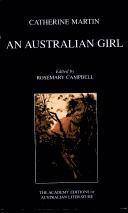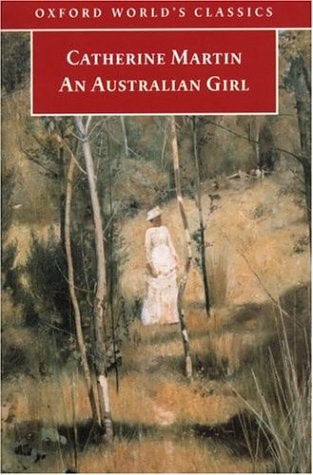
An Australian Girl
0
0
As an Amazon Associate and affiliate partner, Menrva Books earns from qualifying purchases. Learn more
Author Description
As Australia began the process of breaking away from its status as a British colony, Catherine Martin was fascinated with the meaning of Australian culture and identity. She examines these issues through the story of the independent and intelligent Stella Courtland, a young girl who marries and finds herself hampered by the social constraints of her new life. In this sensitive tale of moral and emotional growth, Martin brilliantly captures this turning point in Australian history and anticipates the values of a new generation.
Menrva's Summary
THE PULSE
Stella Courtland navigates the tension between her personal intellectual independence and the rigid social expectations of colonial Australia. As she enters marriage, Stella confronts the limitations placed upon women during a period of national transition. The narrative follows her internal and external conflicts as she attempts to reconcile her own identity with the societal roles imposed by her environment. Martin utilizes a third-person perspective to observe the evolution of her protagonist against the backdrop of a changing nation.
INSIDE THE PAGES
- Exploration of colonial Australian identity
- Focus on the constraints of Victorian-era marriage
- Character-driven moral and emotional development
- Detailed depiction of late 19th-century social hierarchies
- Intellectual protagonist seeking autonomy
- Examination of cultural shifts during the pre-federation era
- Realistic portrayal of domestic life
- Thematic focus on the tension between tradition and modernity
THE COLLECTIVE ECHO
Readers and critics often highlight the novel's significance as a window into the intellectual climate of late 19th-century Australia. Discussion frequently centers on Stella Courtland as a proto-feminist figure who challenges the domestic limitations of her time. The pacing is noted for its deliberate, reflective quality, prioritizing character introspection over rapid plot progression. Scholars appreciate the work for its nuanced portrayal of the cultural friction between British colonial heritage and an emerging national identity. The text remains a subject of interest for those examining the history of Australian literature and the development of the colonial novel.
Page Count:
512
Publication Date:
1999-07-22
Publisher:
Oxford University Press
ISBN-10:
0192839225
ISBN-13:
9780192839220
Australian
Social Commentary
classic
Coming of Age
Historical