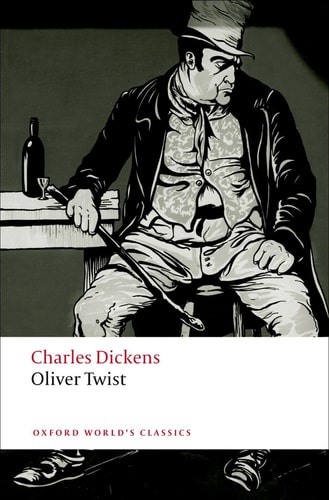
Oliver Twist
0
0
As an Amazon Associate and affiliate partner, Menrva Books earns from qualifying purchases. Learn more
Author Description
Oliver Twist is a classic tale of a boy of unknown parentage born in a workhouse and brought up under the cruel conditions to which pauper children were exposed in the Victorian England. With this novel, Dickens did not merely write a topical satire on the workhouse system and the role of the 1834 New Poor Law in fostering criminality. He created a moral fable about the survival of good, a romance, and a gripping story in which he exploited suspense and violence more effectively than any of his contemporaries. The new Oxford World's Classics edition of Oliver Twist is based on the authoritative Clarendon edition, which uses Dickens's revised text of 1846. It includes his preface of 1841 in which he defended himself against hostile criticism, and includes all twenty-four original illustrations by George Cruikshank. Stephen Gill's groundbreaking introduction gives a fascinating new account of the novel. He also provides appendices on Dickens and Cruikshank, on Dickens's Preface and the Newgate Novel Controversy, on Oliver Twist and the New Poor Law, and on thieves' slang.About the Series: For over 100 years Oxford World's Classics has made available the broadest spectrum of literature from around the globe. Each affordable volume reflects Oxford's commitment to scholarship, providing the most accurate text plus a wealth of other valuable features, including expert introductions by leading authorities, voluminous notes to clarify the text, up-to-date bibliographies for further study, and much more.
Menrva's Summary
THE PULSE
An orphaned boy born into the harsh environment of a Victorian workhouse struggles to maintain his moral integrity while navigating the criminal underworld of London. Oliver Twist seeks to escape his destitute beginnings and find a place of belonging, but he is repeatedly ensnared by the machinations of Fagin and his gang of thieves. The narrative follows his precarious existence as he is pulled between the forces of institutional cruelty and the potential for a life of virtue. Dickens employs a third-person omniscient perspective to expose the systemic failures of the 1834 New Poor Law and the stark realities of urban poverty.
INSIDE THE PAGES
- Detailed depiction of the Victorian workhouse system
- Exploration of the link between poverty and criminality
- Use of suspense and high-stakes dramatic tension
- Satirical critique of social institutions and bureaucracy
- Inclusion of original illustrations by George Cruikshank
- Moral fable structure focusing on the resilience of innocence
- Vivid characterization of the London criminal underworld
- Examination of the 1846 revised text and historical context
THE COLLECTIVE ECHO
Readers and critics frequently highlight the novel's effectiveness in balancing social critique with a compelling, suspense-driven narrative. Discussion often centers on Dickens's ability to create memorable, archetypal characters who embody both the virtues and the vices of Victorian society. Many observers note the atmospheric intensity of the London settings, which serves to heighten the protagonist's vulnerability. The work is widely recognized for its enduring influence on the development of the social novel and its capacity to provoke reflection on systemic inequality. Scholars often emphasize the importance of the original illustrations and historical appendices in providing a comprehensive understanding of the text's initial reception.
Page Count:
544
Publication Date:
2008-07-15
Publisher:
Oxford University Press
ISBN-10:
0199536260
ISBN-13:
9780199536269
Bildungsroman
Victorian
classic
Social Commentary
Crime fiction
Coming of Age
English
English & College Success
Subjects
London England
Criminals fiction
Historical
Community Tags
Other Editions(21)
EdCon Publishing
2023
Default edition
HardPress
2020
HardPress
2020
HardPress
2020
HardPress
2020
Independently Published
2020
Amazon Digital Services LLC - KDP Print US
2019
Independently Published
2019
RUPA PUBLICATIONS INDIA PVT Limited
2015
Oxford University Press
2014

Bloomsbury UK
2012
Oxford University Press
2012
Oxford University Press
2008
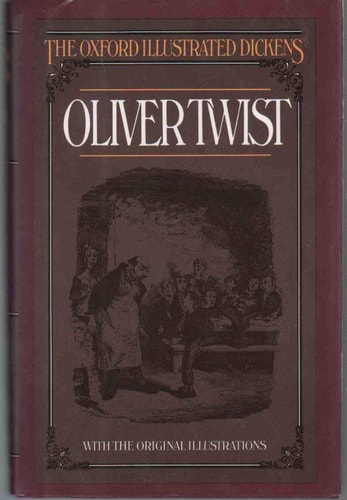
Oxford University Press
1987
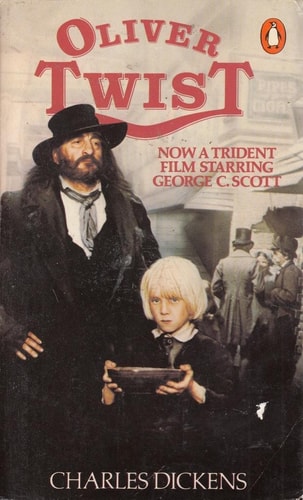
Penguin
1983
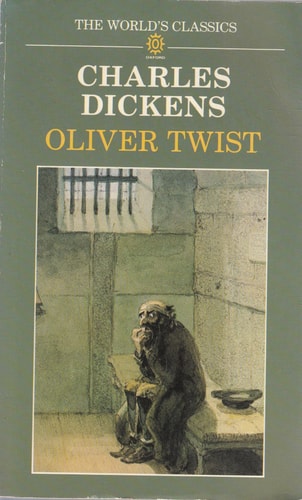
Oxford University Press
1982
Oxford University Press
1967
Oxford University Press
1960
Oxford University Press
1947

Wordsworth Editions
1939
1900
Similar Books



Reader Comments
Share Your Thoughts
No comments yet. Be the first to share your thoughts!