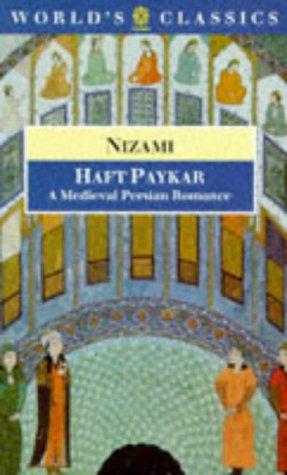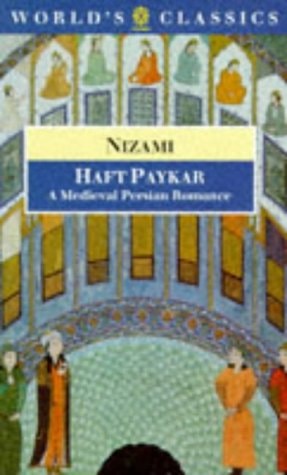
The Haft Paykar: A Medieval Persian Romance
0
0
As an Amazon Associate and affiliate partner, Menrva Books earns from qualifying purchases. Learn more
Author Description
The romance of the Haft Paykar ("Seven Beauties") is one of the great works of Persian literature. Completed in 1197 by the poet Nizami of Ganja, it is an allegorical romance of great beauty and depth, and its central theme of self-knowledge as the path to human perfection is conveyed in rich and vivid imagery and complex symbolism. The Haft Paykar tells the story of the Sassanian ruler Prince Bahram V Gur and his progress towards wisdom, and is enlivened by many adventures and by the seven tales--love stories--told to the prince by his brides. This new English verse translation captures the beauty and sophistication of the original, and makes this masterpiece of twelfth-century Persia accessible to a wide audience.
Menrva's Summary
THE PULSE
The narrative follows the Sassanian ruler Bahram V Gur as he navigates a series of allegorical trials to achieve spiritual and moral perfection. Prince Bahram V Gur seeks to transform from a worldly monarch into a wise sovereign through the acquisition of self-knowledge. He is challenged by the complexities of governance and the internal demands of his own character, which are reflected in the seven distinct tales shared by his brides. The work utilizes a frame narrative structure, blending historical legend with philosophical inquiry to explore the nature of human potential. The text operates within a framework of symbolic verse, where each encounter serves as a pedagogical milestone in the protagonist's development.
INSIDE THE PAGES
- Frame narrative structure featuring seven nested tales
- Allegorical representation of spiritual growth
- Verse-based storytelling format
- Symbolic use of color and planetary associations
- Integration of Sassanian historical legend
- Exploration of the relationship between ruler and subject
- Philosophical focus on self-knowledge and human perfection
- Vivid imagery characteristic of twelfth-century Persian poetry
THE COLLECTIVE ECHO
Readers and scholars frequently highlight the intricate balance between the narrative's romantic elements and its deeper philosophical underpinnings. Discussion often centers on the sophisticated symbolism embedded within the seven tales, which serve as mirrors for the protagonist's internal state. Critics emphasize the work's historical significance as a cornerstone of Persian literature, noting the elegance of the verse even in translation. The atmosphere is described as both opulent and contemplative, providing a window into the intellectual priorities of the medieval period. Many readers appreciate how the text functions simultaneously as an entertaining romance and a rigorous exploration of moral development.
Page Count:
368
Publication Date:
1995-09-07
Publisher:
Oxford University Press
ISBN-10:
0192831844
ISBN-13:
9780192831842
Poetry
Romance
Medieval
Allegory
Classic Literature