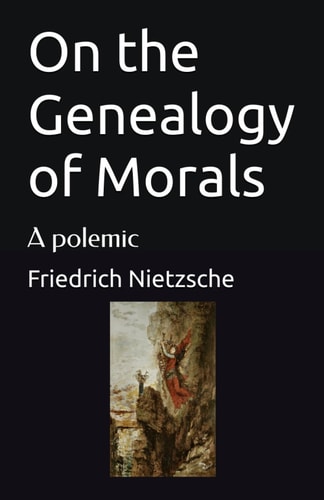
On the Genealogy of Morals: A Polemic
0
0
As an Amazon Associate and affiliate partner, Menrva Books earns from qualifying purchases. Learn more
Author Description
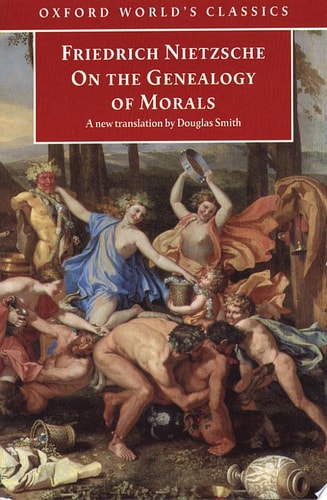
On the Genealogy of Morals (1887) is a book about interpretation and the history of ethics which raises profoundly disquieting issues about the violence of both. This is the most sustained of Nietzsche's later works and offers one of the fullest expressions of his characteristic concerns. The introduction places his ideas within the cultural context of his own time and stresses the relevance of his work for a contemporary audience.
Menrva's Summary
THE THESIS
The book investigates the origins and evolution of moral concepts, specifically questioning the value of 'good' and 'evil' as historical constructs. Friedrich Nietzsche, a German philosopher known for his critique of traditional morality and religion, utilizes a philological and psychological approach to deconstruct the development of conscience and the ascetic ideal. He argues that modern morality is a product of historical power dynamics rather than objective truth, challenging the reader to reconsider the foundations of Western ethical systems.
THE SCOPE MAP
What You Will Find
- A genealogical analysis of the concepts of 'good/bad' versus 'good/evil'.
- An examination of the 'slave revolt in morality' and the role of resentment.
- A critique of the ascetic ideal in religion, science, and philosophy.
- Historical and etymological evidence tracing the roots of moral terminology.
Scope Limits
- The text does not provide a systematic replacement for the moral systems it critiques.
- It does not offer a comprehensive history of all ethical thought, focusing primarily on the Judeo-Christian tradition.
THE AUTHORITY PERSPECTIVE
Scholars and philosophers regard this work as a foundational text for understanding Nietzsche's mature thought and his influence on postmodernism. Readers frequently note the dense, polemical nature of the prose, which requires careful attention to the author's specific linguistic and historical arguments.
Page Count:
208
Publication Date:
1997-03-27
Publisher:
Oxford University Press
ISBN-10:
0192831372
ISBN-13:
9780192831378
Philosophy
Ethics
Philosophy history
19th Century
Community Tags
Other Editions(3)
Similar Books