Joseph Andrews and Shamela
0
0
As an Amazon Associate and affiliate partner, Menrva Books earns from qualifying purchases. Learn more
Author Description
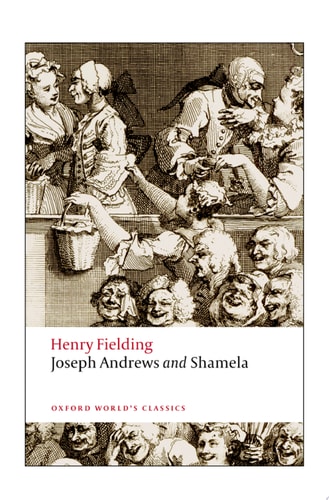
Henry Fielding wrote both Joseph Andrews (1742) and Shamela (1741) in response to Samuel Richardson's book Pamela (1740), of which Shamela is a splendidly bawdy travesty. Joseph Andrews begins as a parody, too, but soon outgrows its origins, and its deepest roots lie in Cervantes and Marivaux. In both stories, Fielding demonstrates his concern for the corruption of contemporary society, politics, religion, morality, and taste. This revised and expanded edition follows the text of Joseph Andrews established by Martin C. Battestin for the definitive Wesleyan Edition of Fielding's works. The text of Shamela is based on the first edition, and two substantial appendices reprint the preliminary matter from the second edition of Richardson's Pamela and Conyers Middleton's Life of Cicero, which is also closely parodied in Shamela. This Oxford World's Classics edition also features a new introduction by Thomas Keymer which situates Fielding's works in their critical and historical contexts.
Menrva's Summary
THE PULSE
The central conflict arises from the authors' desire to subvert the moralizing tone and narrative conventions of Samuel Richardson's popular novel, Pamela. Joseph Andrews follows the titular character, a virtuous footman, as he navigates a series of picaresque adventures and moral tests while attempting to maintain his integrity in a corrupt society. Shamela serves as a direct, biting parody that strips away the veneer of piety found in the source material to expose perceived hypocrisy. Both works utilize a satirical framework to critique the social, political, and religious landscape of 18th-century England.
INSIDE THE PAGES
- Picaresque narrative structure featuring episodic adventures
- Sharp satirical commentary on contemporary social mores
- Use of irony to deconstruct moral posturing
- Intertextual parody of Samuel Richardson's Pamela
- Exploration of the conflict between virtue and societal corruption
- Incorporation of classical literary allusions
- Development of the mock-heroic style
- Character archetypes representing various social classes
THE COLLECTIVE ECHO
Discussion often centers on the evolution of the novel form during the 18th century and how these works function as both literary critique and independent narratives. Readers frequently highlight the contrast between the bawdy, direct humor of Shamela and the more expansive, humanistic development found in Joseph Andrews. Critics often examine how Fielding uses these texts to engage with the philosophical and political debates of his time. The works are noted for their enduring influence on the development of the English novel, particularly in the use of irony and character-driven comedy. Scholars emphasize the importance of these texts in understanding the literary rivalry that defined the period's cultural discourse.
Page Count:
424
Publication Date:
1999-01-01
Publisher:
Oxford Univ Pr (T)
ISBN-10:
0192834282
ISBN-13:
9780192834287
Fiction
Satire
England
Classic Literature
Parody
Clergy
18th century
Community Tags
Other Editions(3)

Similar Books