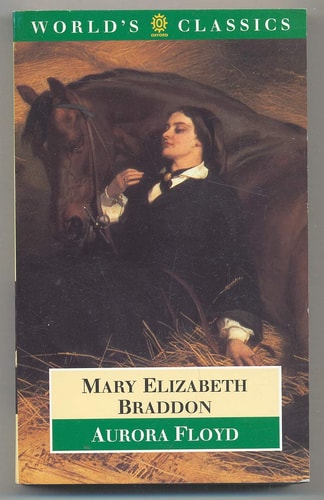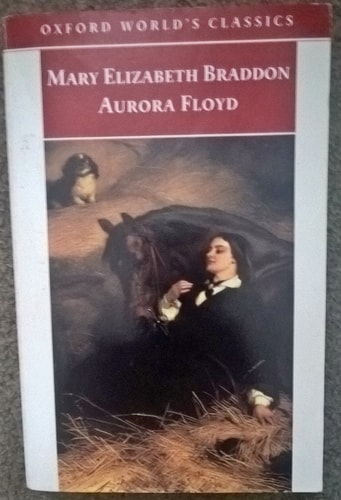
Aurora Floyd
0
0
As an Amazon Associate and affiliate partner, Menrva Books earns from qualifying purchases. Learn more
Author Description
With Lady Audley's Secret, Mary Elizabeth Braddon had established herself, alongside Wilkie Collins and Mrs Henry Wood, as one of the ruling triumvirate of `sensation novelists'. Aurora Floyd (1862-3), following hot on its heels, achieved almost equal popularity and notoriety. Like Lady Audley, Aurora is a beautiful young woman bigamously married and threatened with exposure by a blackmailer. But in Aurora Floyd, and in many of the novels written in imitation of it, bigamy is little more than a euphemism, a device to enable the heroine, and vicariously the reader, to enjoy the forbidden sweets of adultery without adulterous intentions. Passionate, sometimes violent, Aurora does succeed in enjoying them, her desires scarcely chastened by her disastrous first marriage. She represents a challenge to the mid-Victorian sexual code, and particularly to the feminine ideal of simpering, angelic young ladyhood. P. D. Edward's introduction evaluates the novel's leading place among `bigamy-novels' and Braddon's treatment of the power struggle between the sexes, as well as considering the similarities between the author and her heroine.
Menrva's Summary
THE PULSE
A young woman’s hidden past threatens to dismantle her present life when a blackmailer emerges to expose her secret bigamous marriage. Aurora Floyd, a spirited and passionate protagonist, attempts to navigate the rigid expectations of mid-Victorian society while concealing a disastrous previous union. She faces intense scrutiny from those around her and the constant threat of social ruin, forcing her to confront the consequences of her past choices. The narrative employs a traditional third-person perspective to examine the tension between individual desire and the restrictive moral codes of the era.
INSIDE THE PAGES
- Exploration of bigamy as a central plot device
- Critique of the Victorian feminine ideal
- Focus on the power dynamics between genders
- Use of suspense and sensationalist tropes
- Characterization of a non-traditional, assertive heroine
- Examination of social reputation and class expectations
- Integration of mystery elements within a domestic setting
- Detailed portrayal of mid-Victorian social mores
THE COLLECTIVE ECHO
Readers and critics frequently identify this work as a quintessential example of the sensation novel genre that defined the mid-Victorian era. Discussion often centers on Braddon’s subversion of the angelic feminine archetype, noting how Aurora’s assertiveness challenges contemporary standards of behavior. The pacing is often described as brisk, utilizing the threat of exposure to maintain high levels of tension throughout the narrative. Scholars highlight the book’s importance in understanding the period's anxieties regarding marriage, gender roles, and the legal status of women. The work remains a subject of interest for those examining the evolution of the mystery genre and the literary representation of female agency.
Page Count:
498
Publication Date:
1999-06-01
Publisher:
Oxford University Press
ISBN-10:
0192837273
ISBN-13:
9780192837271
Romance
Mystery
Victorian
England
Man-woman relationships
Classic fiction