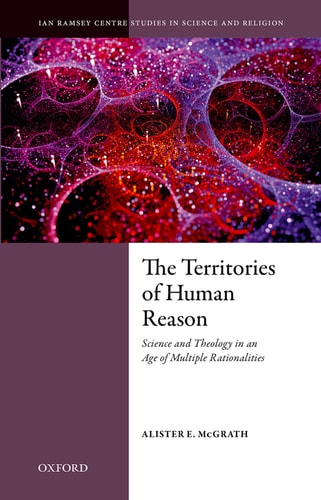
The Territories of Human Reason: Science and Theology in an Age of Multiple Rationalities
0
0
As an Amazon Associate and affiliate partner, Menrva Books earns from qualifying purchases. Learn more
Author Description
Our understanding of human rationality has changed significantly since the beginning of the century, with growing emphasis being placed on multiple rationalities, each adapted to the specific tasks of communities of practice. We may think of the world as an ontological unity - but we use a plurality of methods to investigate and represent this world. This development has called into question both the appeal to a universal rationality, characteristic of the Enlightenment, and also the simple 'modern-postmodern' binary. The Territories of Human Reason is the first major study to explore the emergence of multiple situated rationalities. It focuses on the relation of the natural sciences and Christian theology, but its approach can easily be extended to other disciplines. It provides a robust intellectual framework for discussion of transdisciplinarity, which has become a major theme in many parts of the academic world.Alister E. McGrath offers a major reappraisal of what it means to be 'rational' which will have significant impact on older discussions of this theme. He sets out to explore the consequences of the seemingly inexorable move away from the notion of a single universal rationality towards a plurality of cultural and domain-specific methodologies and rationalities. What does this mean for the natural sciences? For the philosophy of science? For Christian theology? And for the interdisciplinary field of science and religion? How can a single individual hold together scientific and religious ideas, when these arise from quite different rational approaches? This ground-breaking volume sets out to engage these questions and will provoke intense discussion and debate.
Menrva's Summary
THE THESIS
This work investigates how the shift from a singular, universal Enlightenment rationality toward a plurality of domain-specific rationalities impacts the dialogue between natural science and Christian theology. Alister E. McGrath, a scholar with extensive credentials in both molecular biophysics and historical theology, utilizes a framework of transdisciplinarity to analyze how diverse communities of practice construct knowledge. He argues that the ontological unity of the world does not necessitate a singular methodological approach, thereby challenging the traditional modern-postmodern binary in academic discourse.
THE SCOPE MAP
What You Will Find
- An analysis of the transition from Enlightenment universalism to situated, pluralistic rationalities.
- A methodological framework for transdisciplinary engagement between science and theology.
- Critical evaluation of the philosophy of science in the context of multiple cultural and domain-specific rationalities.
Scope Limits
- The text does not provide a comprehensive history of all theological movements.
- It does not offer a unified theory of everything, focusing instead on the mechanics of interdisciplinary dialogue.
THE AUTHORITY PERSPECTIVE
Scholars and academics frequently cite this text as a significant contribution to the field of science and religion, noting its utility in bridging disparate intellectual domains. Readers often observe the high level of academic density, which makes the work most suitable for those already familiar with the philosophy of science and systematic theology.
Page Count:
304
Publication Date:
2021-07-27
Publisher:
Oxford University Press
ISBN-10:
0192845683
ISBN-13:
9780192845689
Philosophy
Religion
Rationalism
Theology
Academic
Epistemology
Science and Religion
Community Tags
Similar Books