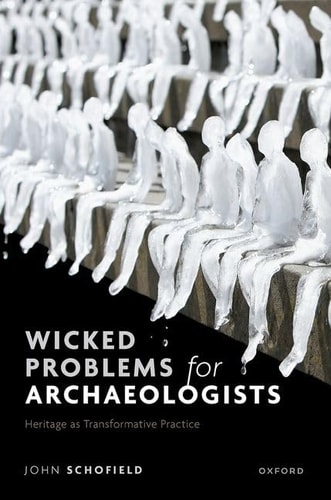
Wicked Problems for Archaeologists: Heritage as Transformative Practice
0
0
As an Amazon Associate and affiliate partner, Menrva Books earns from qualifying purchases. Learn more
Author Description
'Wicked Problems' are those problems facing the planet and its inhabitants, present and future, which are hard (if not impossible) to resolve and for which bold, creative, and messy solutions are typically required. The adjective 'wicked' describes the mischievous and even evil quality of these problems, where proposed solutions often turn out to be worse than the symptoms. This wide-ranging and innovative book encourages readers to think about archaeology in an entirely new way, as fresh, relevant, and future-oriented. It examines some of the novel ways that archaeology (alongside cultural heritage practice) can contribute to resolving some of the world's most wicked problems, or global challenges as they are sometimes known. With chapters covering climate change, environmental pollution, health and wellbeing, social injustice, and conflict, the book uses many and diverse examples to explain how, through studying the past and present through an archaeological lens, in ways that are creative, ambitious, and both inter- and transdisciplinary, significant 'small wins' can be achieved. Through these small wins, archaeologists can help to mitigate some of those most pressing of wicked problems, contributing therefore to a safer, healthier, and more stable world.
Menrva's Summary
THE THESIS
This book investigates how archaeological practice and cultural heritage management can be reoriented to address complex, intractable global challenges known as 'wicked problems.' John Schofield, a professor of archaeology with extensive experience in contemporary heritage, argues that by applying archaeological methods to the present, practitioners can generate creative, interdisciplinary solutions that contribute to a more stable and equitable future. The work posits that while these global issues lack simple fixes, the discipline of archaeology offers unique tools for achieving incremental 'small wins' that mitigate systemic harm.
THE SCOPE MAP
What You Will Find
- Analysis of the intersection between heritage practice and global crises including climate change and social injustice.
- Methodological frameworks for transdisciplinary collaboration in archaeological research.
- Case studies demonstrating the application of archaeological lenses to contemporary health, environmental, and conflict-related issues.
Scope Limits
- The text does not provide a comprehensive technical manual for traditional site excavation or artifact conservation.
- It does not offer a singular, universal solution to the identified wicked problems, focusing instead on adaptive and localized strategies.
THE AUTHORITY PERSPECTIVE
Experts in the field recognize this work as a significant shift toward contemporary and applied archaeology, moving the discipline beyond historical documentation. Readers frequently note the accessible yet provocative nature of the prose, which challenges traditional academic boundaries to emphasize the social relevance of heritage studies.
Page Count:
368
Publication Date:
2024-01-01
Publisher:
Oxford University Press
ISBN-10:
0192844881
ISBN-13:
9780192844880
Politics
Sustainability
Climatology
Anthropology
Archaeology
Social Science