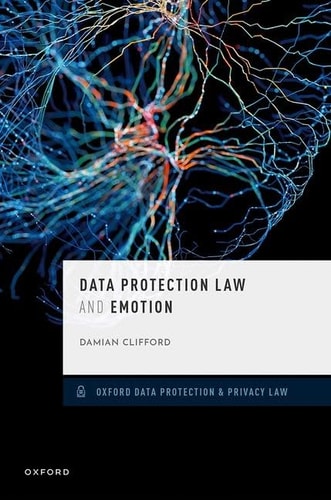
Data Protection Law and Emotion
0
0
As an Amazon Associate and affiliate partner, Menrva Books earns from qualifying purchases. Learn more
Author Description
Data protection law is often positioned as a regulatory solution to the risks posed by computational systems. Despite the widespread adoption of data protection laws, however, there are those who remain sceptical as to their capacity to engender change. Much of this criticism focuses on our role as 'data subjects'. It has been demonstrated repeatedly that we lack the capacity to act in our own best interests and, what is more, that our decisions have negative impacts on others. Our decision-making limitations seem to be the inevitable by-product of the technological, social, and economic reality. Data protection law bakes in these limitations by providing frameworks for notions such as consent and subjective control rights and by relying on those who process our data to do so fairly.Despite these valid concerns,Data Protection Law and Emotion argues that the (in)effectiveness of these laws are often more difficult to discern than the critical literature would suggest, while also emphasizing the importance of the conceptual value of subjective control. These points are explored (and indeed, exposed) by investigating data protection law through the lens of the insights provided by law and emotion scholarship and demonstrating the role emotions play in our decision-making. The book uses the development of Emotional Artificial Intelligence, a particularly controversial technology, as a case study to analyse these issues.Original and insightful, Data Protection Law and Emotion offers a unique contribution to a contentious debate that will appeal to students and academics in data protection and privacy, policymakers, practitioners, and regulators.
Menrva's Summary
THE THESIS
This book investigates whether current data protection frameworks are inherently flawed by their reliance on rational decision-making models, specifically by examining the intersection of law, human emotion, and computational systems. Damian Clifford, a scholar in technology law, challenges the prevailing skepticism regarding the efficacy of data protection regulations. By integrating insights from law and emotion scholarship, he argues that the conceptual value of subjective control remains significant despite the documented limitations of individual decision-making in digital environments.
THE SCOPE MAP
What You Will Find
- Analysis of the intersection between data protection law and behavioral psychology
- Examination of the limitations of consent-based regulatory frameworks
- Case study on the development and regulation of Emotional Artificial Intelligence
- Theoretical framework for understanding subjective control rights
Scope Limits
- Does not provide a comprehensive guide to global data protection compliance
- Does not focus on the technical engineering aspects of AI development
THE AUTHORITY PERSPECTIVE
Experts recognize this text as a specialized contribution to the field of privacy law, particularly for its interdisciplinary approach to regulatory theory. Readers frequently note the academic density of the prose, which is intended for legal scholars, policymakers, and advanced students of data protection.
Page Count:
256
Publication Date:
2024-01-01
Publisher:
Oxford University Press
ISBN-10:
0192845861
ISBN-13:
9780192845863
Politics
Legal Theory
World politics
Sociology of Law
Law
Machine Learning
Technology Law
Data privacy
Communications
Intellectual Property
Community Tags
Other Editions(2)
Similar Books