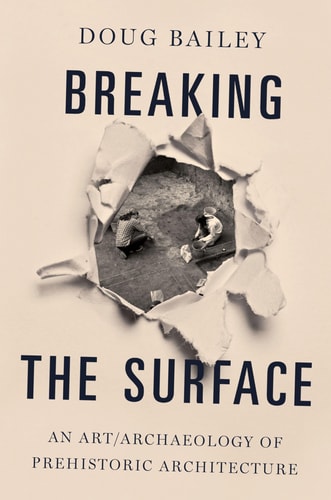
Breaking the Surface
0
0
As an Amazon Associate and affiliate partner, Menrva Books earns from qualifying purchases. Learn more
Author Description
In Breaking the Surface, Doug Bailey offers a radical alternative for understanding Neolithic houses, providing much-needed insight not just into prehistoric practice, but into another way of doing archaeology. Using his years of fieldwork experience excavating the early Neolithic pit-houses of southeastern Europe, Bailey exposes and elucidates a previously under-theorized aspect of prehistoric pit construction: the actions and consequences of digging defined as breaking the surface of the ground. Breaking the Surface works through the consequences of this redefinition in order to redirect scholarship on the excavation and interpretation of pit-houses in Neolithic Europe, offering detailed critiques of current interpretations of these earliest European architectural constructions.The work of the book is performed by juxtaposing richly detailed discussions of archaeological sites (Etton and The Wilsford Shaft in the UK, and Magura in Romania), with the work of three artists-who-cut (Ron Athey, Gordon Matta-Clark, Lucio Fontana), with deep and detailed examinations of the philosophy of holes, the perceptual psychology of shapes, and the linguistic anthropology of cutting and breaking words, as well as with cultural diversity in framing spatial reference and through an examination of pre-modern ungrounded ways of living. Breaking the Surface is as much a creative act on its own-in its mixture of work from disparate periods and regions, its use of radical text interruption, and its juxtaposition of text and imagery-as it is an interpretive statement about prehistoric architecture. Unflinching and exhilarating, it is a major development in the growing subdiscipline of art/archaeology.
Menrva's Summary
THE THESIS
How does the act of digging into the earth fundamentally alter our understanding of Neolithic pit-house construction and prehistoric human experience? Doug Bailey, an experienced archaeologist specializing in southeastern European Neolithic sites, challenges conventional interpretations of prehistoric architecture. He argues that the physical act of breaking the surface of the ground is a significant, under-theorized event that carries profound social and symbolic consequences. By integrating archaeological data with philosophy, art theory, and linguistic anthropology, Bailey proposes a new framework for interpreting these early structures.
THE SCOPE MAP
What You Will Find
- Detailed analysis of archaeological sites including Etton and The Wilsford Shaft in the UK and Magura in Romania.
- A multidisciplinary methodology combining art theory, perceptual psychology, and linguistic anthropology.
- Comparative studies of artists who utilize cutting as a creative medium, such as Ron Athey, Gordon Matta-Clark, and Lucio Fontana.
Scope Limits
- The text does not provide a comprehensive survey of all Neolithic architectural types.
- It focuses specifically on the theoretical implications of pit-house construction rather than providing a general history of the Neolithic period.
THE AUTHORITY PERSPECTIVE
Experts in the field of art/archaeology recognize this work as a significant contribution to the theoretical discourse surrounding prehistoric architecture. Readers frequently note the dense, interdisciplinary nature of the prose, which challenges traditional academic boundaries by blending archaeological fieldwork with artistic and philosophical inquiry.
Page Count:
360
Publication Date:
2018-06-28
Publisher:
Oxford University Press
ISBN-10:
019061188X
ISBN-13:
9780190611880
Philosophy
Art History
European History
Dwellings
Anthropology
Architecture
Archaeology
Neolithic Studies
Community Tags
Other Editions(3)

Similar Books










Reader Comments
Share Your Thoughts
No comments yet. Be the first to share your thoughts!