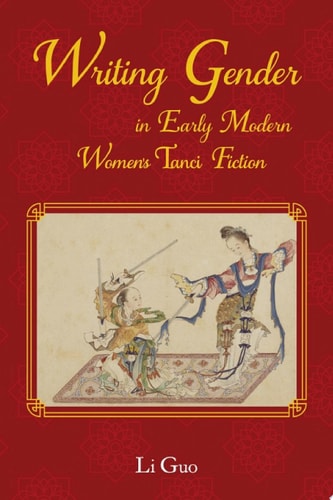
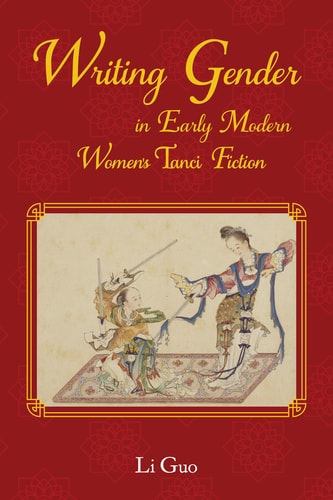
Writing Gender in Early Modern Chinese Women's Tanci Fiction
0
0
As an Amazon Associate and affiliate partner, Menrva Books earns from qualifying purchases. Learn more
Author Description
Women’s tanci, or “plucking rhymes,” are chantefable narratives written by upper-class educated women from seventeenth-century to early twentieth-century China. Writing Gender in Early Modern Chinese Women’s Tanci Fiction offers a timely study on early modern Chinese women’s representations of gender, nation, and political activism in their tanci works before and after the Taiping Rebellion (1850 to 1864), as well as their depictions of warfare and social unrest. Women tanci authors’ redefinition of female exemplarity within the Confucian orthodox discourses of virtue, talent, chastity, and political integrity could be bourgeoning expressions of female exceptionalism and could have foreshadowed protofeminist ideals of heroism. They establish a realistic tenor in affirming feminine domestic authority, and open up spaces for discussions of “womanly becoming,” female exceptionalism, and shifting family power structures. The vernacular mode underlying these texts yields productive possibilities of gendered self-representations, bodily valences, and dynamic performances of sexual roles. The result is a vernacular discursive frame that enables women’s appropriation and refashioning of orthodox moral values as means of self-affirmation and self-realization. Validations of women’s political activism and loyalism to the nation attest to tanci as a premium vehicle for disseminating progressive social incentives to popular audiences. Women’s tanci marks early modern writers’ endeavors to carve out a space of feminine becoming, a discursive arena of feminine appropriation, reinvention, and boundary-crossings. In this light, women’s tanci portrays gendered mobility through depictions of a heroine’s voyages or social ascent, and entails a forward-moving historical progression toward a more autonomous and vested model of feminine subjectivity.
Menrva's Summary
THE THESIS
This study investigates how early modern Chinese women writers utilized tanci narratives to represent and redefine gender, nation, and political activism. Li Guo, drawing on extensive knowledge of Chinese literary history and gender studies, analyzes tanci works from the seventeenth to early twentieth centuries. The book examines how these narratives, written by educated upper-class women, engaged with Confucian discourses on virtue, talent, chastity, and political integrity, often subverting or reinterpreting them to express protofeminist ideals and female exceptionalism. Guo argues that tanci served as a crucial vehicle for women to assert domestic authority, explore evolving family structures, and articulate a more autonomous model of feminine subjectivity.
THE SCOPE MAP
- Analysis of women's tanci (chantefable narratives) from 17th to early 20th century China.
- Exploration of gender, nation, and political activism in tanci works before and after the Taiping Rebellion.
- Examination of depictions of warfare and social unrest within these narratives.
- Study of how tanci authors redefined female exemplarity within Confucian orthodox discourses.
- Discussion of tanci as expressions of female exceptionalism and protofeminist ideals.
- Analysis of the vernacular mode and its possibilities for gendered self-representation and performance of sexual roles.
- Investigation of tanci as a vehicle for disseminating progressive social incentives and validating women's political activism.
THE AUTHORITY PERSPECTIVE
This book is recognized for its in-depth scholarly analysis of women's contributions to early modern Chinese literature and culture. Scholars likely appreciate its nuanced examination of how tanci narratives provided a platform for women to challenge and reshape traditional gender roles and societal expectations. The work is expected to be a significant contribution to the fields of Chinese literary history, gender studies, and Asian studies, offering new perspectives on female agency and protofeminist thought in pre-modern China.
Page Count:
290
Publication Date:
2021-06-15
Publisher:
Purdue University Press
ISBN-10:
1612496601
ISBN-13:
9781612496603
History
Non-Fiction
Gender Studies
Literary Criticism
Asian Studies
Community Tags
Other Editions(2)
Similar Books





Reader Comments
Share Your Thoughts
No comments yet. Be the first to share your thoughts!