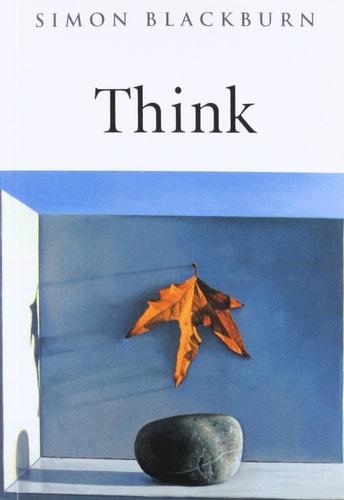
Think: A Compelling Introduction to Philosophy
0
0
As an Amazon Associate and affiliate partner, Menrva Books earns from qualifying purchases. Learn more
Author Description
Here at last is a coherent, unintimidating introduction to the challenging and fascinating landscape of Western philosophy. Written expressly for "anyone who believes there are big questions out there, but does not know how to approach them," Think provides a sound framework for exploring the most basic themes of philosophy, and for understanding how major philosophers have tackled the questions that have pressed themselves most forcefully on human consciousness. Simon Blackburn, author of the best-selling Oxford Dictionary of Philosophy, begins by making a convincing case for the relevance of philosophy and goes on to give the reader a sense of how the great historical figures such as Plato, Hume, Kant, Descartes, and others have approached its central themes. In a lively and accessible style, Blackburn approaches the nature of human reflection and how we think, or can think, about knowledge, fate, ethics, identity, God, reason, and truth. Each chapter explains a major issue, and gives the reader a self-contained guide through the problems that the philosophers have studied. Because the text approaches these issues from the ground up, the untrained reader will emerge from its pages able to explore other philosophies with greater pleasure and understanding and be able to think--philosophically--for him or herself. Philosophy is often dismissed as a purely academic discipline with no relation to the "real" world non-philosophers are compelled to inhabit. Think dispels this myth and offers a springboard for all those who want to learn how the basic techniques of thinking shape our virtually every aspect of our existence.
Menrva's Summary
THE THESIS
This book investigates how the fundamental techniques of philosophical inquiry can be applied to understand the most significant questions regarding human existence and consciousness. Simon Blackburn, a noted philosopher and author of the Oxford Dictionary of Philosophy, provides a structured framework for non-specialists to engage with complex ideas. By examining the historical approaches of thinkers such as Plato, Hume, and Kant, he demonstrates that philosophy is not merely an abstract academic exercise but a practical tool for daily life. The text serves as a guide for readers to develop their own capacity for critical reflection on topics including knowledge, ethics, and truth.
THE SCOPE MAP
What You Will Find
- An introduction to core philosophical themes including fate, identity, God, and reason.
- A historical overview of major thinkers and their specific contributions to Western thought.
- Methodological guidance on how to approach philosophical texts and arguments independently.
Scope Limits
- The text does not provide an exhaustive history of every philosophical school or minor movement.
- It focuses primarily on Western philosophical traditions rather than Eastern or non-Western perspectives.
THE AUTHORITY PERSPECTIVE
Experts frequently cite this work as a foundational text for beginners due to its accessible prose and clear organization. Readers often note that while the subject matter is dense, the author successfully demystifies complex concepts for the layperson.
Page Count:
330
Publication Date:
2006-01-01
Publisher:
SFBC
ISBN-10:
0192854259
ISBN-13:
9780192854254
Philosophy
Non-Fiction
Metaphysics
Philosophy
Education
Logic
Ethics
Community Tags
Similar Books