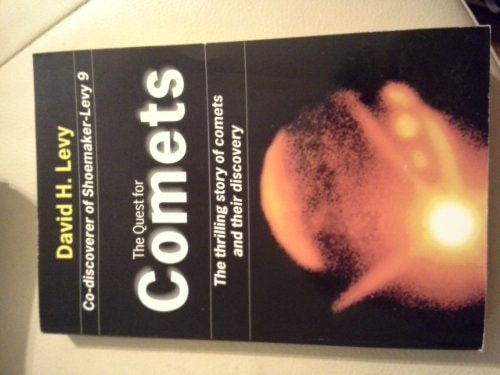
The Quest for Comets: An Explosive Trail of Beauty and Danger
0
0
As an Amazon Associate and affiliate partner, Menrva Books earns from qualifying purchases. Learn more
Author Description
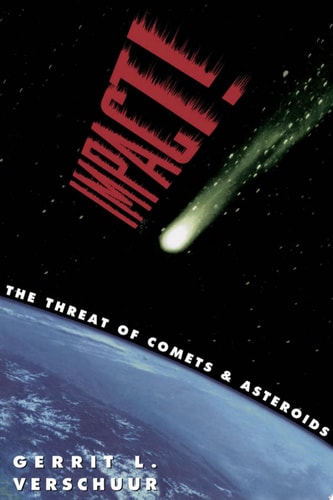
The brilliant trailing beauty of fiery comets has inspired fear, wonder, and awe since the dawn of human history. Brighter than stars, moving and disappearing in their own singular orbits, comets have been among the most mysterious elements in the sky, eluding our understanding until very recently. With the aid of space probes, scientists have discovered that these swiftly moving chunks of ice and carbon are more plentiful and far more dangerous than suspected. Scientists are also beginning to realize the monumental role played by comets in the development of the Earth and solar system. David Levy describes in dramatic detail the thrilling yet often devastating effects of comet collisions. In the dawn of our solar system, the Earth was barraged with comets that may have carried the materials necessary to lay the foundations for life on this planet. Levy also presents compelling evidence for later comet collisions, including those of the age of dinosaurs. Great impacts, Levy asserts, not only caused the extinction of the dinesaurs, but ushered in new species of life. As Levy so clearly explains, scientists are realizing that comet collisions are virtually inevitable. Levy reveals possible future collisions with the Earth and describes the terrible risks to life they would pose. He even shows how we might prepare to withstand the impact of large comets in the future.
Menrva's Summary
THE THESIS
What role do comets play in the formation of the solar system and the ongoing survival of life on Earth? David H. Levy, a renowned astronomer and comet discoverer, utilizes historical data and modern space probe findings to argue that comets are not merely celestial curiosities but active agents in planetary evolution. He posits that while these bodies may have delivered the building blocks for life, they also represent a persistent, inevitable threat of extinction-level impacts that require proactive human preparation.
THE SCOPE MAP
What You Will Find
- Historical observations of comets and their cultural impact
- Scientific analysis of comet composition and orbital mechanics
- Evidence linking past comet impacts to mass extinction events
- Theoretical frameworks for planetary defense and impact mitigation
Scope Limits
- Does not provide a comprehensive technical manual for amateur telescope construction
- Does not cover the entirety of deep-space cosmology beyond the solar system
THE AUTHORITY PERSPECTIVE
Experts recognize this work as an accessible entry point for understanding the intersection of planetary science and existential risk. Readers frequently note that the prose balances technical astronomical detail with a narrative urgency that makes complex orbital dynamics understandable for a general audience.
Page Count:
284
Publication Date:
1995-01-01
Publisher:
Oxford Univ Pr
ISBN-10:
0192861816
ISBN-13:
9780192861818
Science
Comets
Astronomy
Astrophysics
Planetary Science
Community Tags
Similar Books