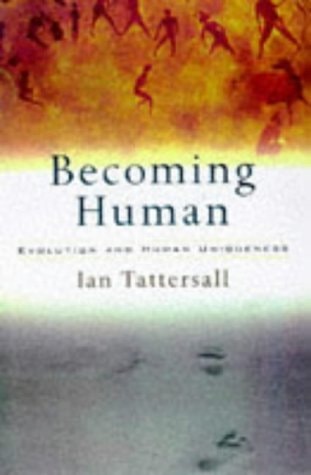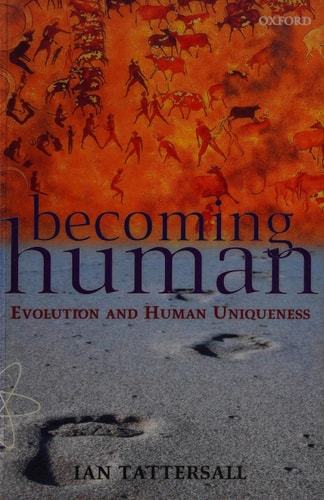
Becoming Human: Evolution and Human Uniqueness
0
0
As an Amazon Associate and affiliate partner, Menrva Books earns from qualifying purchases. Learn more
Author Description
One of the traits that distinguishes us from our nearest relatives is our curiosity about the origins of our species. In this new paperback, Ian Tattersall (author of The Fossil Trail) discusses human uniqueness, investigating the origins of those characteristics and processes that so clearly distinguish human beings, such as creativity, language, and consciousness. Taking the reader around the world, stopping in France to examine 30,000-year-old cave paintings, in Africa to see where our earliest ancestors left their bones, and in remote forests to spy on our closest living relatives, the great apes, Tattersall uncovers what it is that makes us really different and what the future might hold for our species.
Menrva's Summary
THE THESIS
This book investigates the biological and cognitive milestones that define human uniqueness within the context of evolutionary history. Ian Tattersall, a renowned paleoanthropologist and curator emeritus at the American Museum of Natural History, synthesizes fossil evidence and comparative biology to argue that human consciousness and symbolic thought emerged as distinct, relatively recent developments. He challenges linear models of human progress, proposing instead that our current cognitive state is the result of a complex, non-linear evolutionary process.
THE SCOPE MAP
What You Will Find
- Analysis of the fossil record from African sites
- Examination of symbolic artifacts such as Upper Paleolithic cave paintings
- Comparative studies of great ape behavior and cognitive capacity
- Discussion of the emergence of language and abstract thought
Scope Limits
- Does not provide a comprehensive genetic map of human evolution
- Does not focus on modern sociological or cultural anthropology
THE AUTHORITY PERSPECTIVE
Experts recognize this work as a highly accessible synthesis of complex paleoanthropological data for a general audience. Readers frequently note the clarity of Tattersall's prose, which effectively bridges the gap between technical fossil analysis and broader philosophical questions about human nature.
Page Count:
272
Publication Date:
2000-09-01
Publisher:
Oxford University Press
ISBN-10:
0192862146
ISBN-13:
9780192862143
Science
Anthropology
Primates
Paleoanthropology
Human Origins
Evolutionary Biology