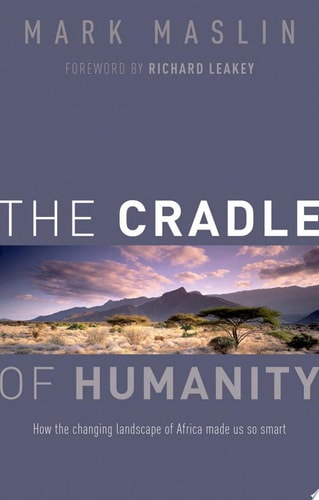
The Cradle of Humanity
0
0
As an Amazon Associate and affiliate partner, Menrva Books earns from qualifying purchases. Learn more
Author Description
Humans Are Rather Weak When Compared With Many Other Animals. We Are Not Particularly Fast And Have No Natural Weapons. Yet Homo Sapiens Currently Number Nearly 7.5 Billion And Are Set To Rise To Nearly 10 Billion By The Middle Of This Century. We Have Influenced Almost Every Part Of The Earth System And As A Consequence Are Changing The Global Environmental And Evolutionary Trajectory Of The Earth. So How Did We Become The Worlds Apex Predator And Take Over The Planet? Fundamental To Our Success Is Our Intelligence, Not Only Individually But More Importantly Collectively. But Why Did Evolution Favour The Brainy Ape? Given The Calorific Cost Of Running Our Large Brains, Not To Mention The Difficulties Posed For Childbirth, This Bizarre Adaptation Must Have Given Our Ancestors A Considerable Advantage. In This Book Mark Maslin Brings Together The Latest Insights From Hominin Fossils And Combines Them With Evidence Of The Changing Landscape Of The East African Rift Valley To Show How All These Factors Led To Selection Pressures That Favoured Our Ultrasocial Brains. Astronomy, Geology, Climate, And Landscape All Had A Part To Play In Making East Africa The Cradle Of Humanity And Allowing Us To Dominate The Planet.
Menrva's Summary
THE THESIS
This book investigates the specific environmental and evolutionary pressures that drove the development of human intelligence and allowed Homo sapiens to become the dominant species on Earth. Mark Maslin, a professor of Earth System Science, synthesizes data from hominin fossil records and geological evidence from the East African Rift Valley. He argues that a unique convergence of astronomical, climatic, and landscape factors created the selection pressures necessary for the evolution of the large, ultrasocial human brain.
THE SCOPE MAP
What You Will Find
- Analysis of the East African Rift Valley as a catalyst for human evolution
- Integration of climate science, geology, and evolutionary biology
- Examination of the metabolic costs and reproductive challenges associated with large brain development
Scope Limits
- Does not provide a comprehensive history of human civilization post-Pleistocene
- Does not focus on cultural or linguistic development beyond their biological foundations
THE AUTHORITY PERSPECTIVE
Experts acknowledge this work as a clear, accessible synthesis of complex interdisciplinary research regarding human origins. Readers frequently note that the text effectively bridges the gap between geological history and biological evolution for a general audience.
Page Count:
256
Publication Date:
2016-01-01
Publisher:
Oxford University Press
ISBN-10:
0191009709
ISBN-13:
9780191009709
Science
Human History
Geology
Evolutionary Biology
Anthropology
Paleoanthropology
Community Tags
Similar Books