Painting US Empire: Nineteenth-century Art and Its Legacies
0
0
As an Amazon Associate and affiliate partner, Menrva Books earns from qualifying purchases. Learn more
Author Description
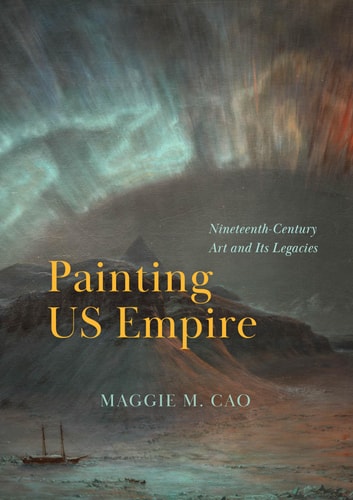
A fresh look at the global dimensions of US painting from the 1850s to 1898. Painting US Empire is the first book to offer a synthetic account of art and US imperialism around the globe in the nineteenth century. In this work, art historian Maggie M. Cao crafts a nuanced portrait of nineteenth-century US painters' complicity with and resistance to ascendant US imperialism, offering eye-opening readings of canonical works, landscapes of polar expeditions and tropical tourism, still lifes of imported goods, genre paintings, and ethnographic portraiture. Revealing how the US empire was "hidden in plain sight" in the art of this period, Cao examines artists including Frederic Edwin Church and Winslow Homer who championed and expressed ambivalence toward the colonial project. She also tackles the legacy of US imperialism, examining Euro-American painters of the past alongside global artists of the present. Pairing each chapter with reflections on works by contemporary anticolonial artists including Tavares Strachan, Nicholas Galanin, and Yuki Kihara, Cao addresses important contemporary questions around representation, colonialism, and indigeneity. This book foregrounds an underacknowledged topic in the study of nineteenth-century US art and illuminates the ongoing ecological and economic effects of the US empire.
Menrva's Summary
THE THESIS
This book examines the complex relationship between art and the expansion of US influence in the late 19th century. Maggie M. Cao, an art historian, investigates how American painters of the period between 1850 and 1898 both participated in and resisted the burgeoning US empire. Through close readings of canonical artworks, landscapes of exploration and tourism, still lifes of imported goods, genre paintings, and ethnographic portraits, Cao reveals how imperial ambitions were embedded within the visual culture of the era. The book also explores the lasting impact of this period, connecting 19th-century artistic expressions to contemporary issues of representation, colonialism, and indigeneity through a dialogue with modern anticolonial artists.
THE SCOPE MAP
- Analysis of US painting from the 1850s to 1898 with a focus on global dimensions.
- Examination of canonical works, landscapes of polar expeditions and tropical tourism, and still lifes of imported goods.
- Readings of genre paintings and ethnographic portraiture to uncover hidden imperial narratives.
- Discussion of artists such as Frederic Edwin Church and Winslow Homer and their engagement with imperialism.
- Exploration of the legacy of US imperialism through a comparison of past painters and present-day global artists.
- Inclusion of reflections on works by contemporary anticolonial artists like Tavares Strachan, Nicholas Galanin, and Yuki Kihara.
- Addresses contemporary questions of representation, colonialism, and indigeneity.
- Illuminates the ongoing ecological and economic effects of the US empire.
THE AUTHORITY PERSPECTIVE
The book is positioned as a novel contribution to the study of nineteenth-century US art, offering a synthetic account of art and US imperialism. It is expected to appeal to scholars and students of art history, American studies, and cultural studies interested in the intersection of visual culture and political expansion. The inclusion of contemporary artists suggests a framework that connects historical analysis to ongoing global dialogues about colonialism and its legacies. The work aims to foreground an underacknowledged topic and illuminate persistent effects of US imperial endeavors.
Page Count:
360
Publication Date:
2025-01-01
Publisher:
University of Chicago Press
ISBN-10:
0226832414
ISBN-13:
9780226832418
Art
History
Non-Fiction
Nineteenth century
American Studies
Art History
Imperialism