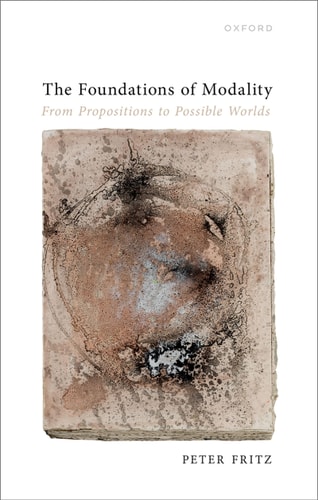
The Foundations of Modality: From Propositions to Possible Worlds
0
0
As an Amazon Associate and affiliate partner, Menrva Books earns from qualifying purchases. Learn more
Author Description
The notions of necessity and possibility, as well as the notion of a possible world, are ubiquitous in philosophy. Nevertheless, these notions remain controversial. It also remains controversial whether metaphysics requires notions drawing distinctions which are finer than those which can be drawn in terms of necessity and possibility, such as the recently much-discussed notion of grounding. In order to make progress on these debates, this book develops a general framework for theorizing about such intensional notions using the tools of higher-order logic.The Foundations of Modality begins by motivating the use of higher-order logic, and introduces a particularly simple form of higher-order logic. Progress is made on well-trodden territory concerning modality and possible worlds by considering first the question how fine propositions are individuated. Peter Fritz uses both logical results and philosophical arguments to motivate a relatively coarse-grained individuation of propositions. Fritz shows that a number of putative metaphysical notions are ruled out by this theory of individuation. Furthermore, the theory allows the controversial notion of (metaphysical) necessity to be delineated as the broadest necessity, which applies just to the single tautologous proposition. This book also vindicates appeals to possible worlds: First, it shows that if anything plays the theoretical role of possible worlds, then certain propositions do so. Second, it argues that there are in fact the required propositions playing the role of possible worlds; this is shown using the notion of plural quantification over propositions in higher-order logic.
Menrva's Summary
THE THESIS
This book investigates the foundational nature of modality, specifically addressing how necessity, possibility, and possible worlds can be rigorously theorized within a formal framework. Peter Fritz, a researcher in formal philosophy, utilizes higher-order logic to construct a systematic approach to intensional notions. By evaluating the individuation of propositions, the author argues for a coarse-grained framework that clarifies the boundaries of metaphysical necessity and validates the theoretical utility of possible worlds.
THE SCOPE MAP
What You Will Find
- A formal framework for theorizing about intensional notions using higher-order logic.
- An analysis of proposition individuation and its impact on metaphysical distinctions.
- A defense of the existence of possible worlds through plural quantification.
Scope Limits
- The text does not provide an exhaustive history of modal logic or alternative non-formalist metaphysical theories.
- It focuses primarily on logical and analytical approaches rather than linguistic or psychological interpretations of modality.
THE AUTHORITY PERSPECTIVE
Experts identify this work as a rigorous contribution to contemporary analytic metaphysics and formal logic. Readers frequently note the technical density of the prose, which requires a strong background in higher-order logic to fully grasp the author's arguments.
Page Count:
224
Publication Date:
2024-01-01
Publisher:
Oxford University Press
ISBN-10:
0192870025
ISBN-13:
9780192870025
Politics
Philosophy
History
Metaphysics
Logic
Formal Logic
New Used & Rental Textbooks
Epistemology
Community Tags
Similar Books