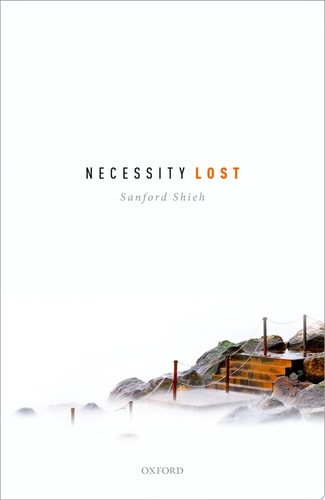
Necessity Lost
0
0
As an Amazon Associate and affiliate partner, Menrva Books earns from qualifying purchases. Learn more
Author Description
A Long Tradition, Going Back To Aristotle, Conceives Of Logic In Terms Of Necessity And Possibility: A Deductive Argument Is Correct If It Is Not Possible For The Conclusion To Be False When The Premises Are True. A Relatively Unknown Feature Of The Analytic Tradition In Philosophy Is That, At Its Very Inception, This Venerable Conception Of The Relation Between Logic And Necessity And Possibility - The Concepts Of Modality - Was Put Into Question. The Founders Of Analytic Philosophy, Gottlob Frege And Bertrand Russell, Held That These Concepts Are Empty: There Are No Genuine Distinctions Among The Necessary, The Possible, And The Actual. In This Book, The First Of Two Volumes, Sanford Shieh Investigates The Grounds Of This Position And Its Consequences For Frege's And Russell's Conceptions Of Logic. The Grounds Lie In Doctrines On Truth, Thought, And Knowledge, As Well As On The Relation Between Mind And Reality, That Are Central To The Philosophies Of Frege And Russell, And Are Of Enduring Philosophical Interest. The Upshot Of This Opposition To Modality Is That Logic Is Fundamental, And, To Be Coherent, Modal Concepts Would Have To Be Reconstructed In Logical Terms. This Rejection Of Modality In Early Analytic Philosophy Remains Of Contemporary Significance, Though The Coherence Of Modal Concepts Is Rarely Questioned Nowadays Because It Is Generally Assumed That Suspicion Of Modality Derives From Logical Positivism, Which Has Not Survived Philosophical Scrutiny. The Anti-modal Arguments Of Frege And Russell, However, Have Nothing To Do With Positivism And Remain A Challenge To The Contemporary Acceptance Of Modal Notions.
Menrva's Summary
THE THESIS
This book investigates the historical and philosophical grounds for the rejection of modal concepts—necessity and possibility—by the founders of analytic philosophy, Gottlob Frege and Bertrand Russell. Sanford Shieh, a scholar of early analytic philosophy, examines how Frege and Russell concluded that modal distinctions are empty and lack genuine ontological status. The author analyzes the intersection of their theories on truth, thought, and knowledge to explain why they positioned logic as a fundamental framework that excludes traditional modal categories.
THE SCOPE MAP
What You Will Find
- An analysis of the anti-modal arguments presented by Gottlob Frege and Bertrand Russell.
- An examination of the relationship between logic, mind, and reality in early analytic thought.
- A critique of the contemporary assumption that suspicion of modality is limited to logical positivism.
Scope Limits
- This text is the first of two volumes and focuses specifically on the foundational arguments of Frege and Russell.
- It does not provide a comprehensive history of modal logic post-1950.
THE AUTHORITY PERSPECTIVE
Scholars recognize this work as a rigorous re-evaluation of the origins of analytic philosophy that challenges modern assumptions regarding modal concepts. Readers frequently note the academic density of the prose, which requires a strong background in formal logic and the history of philosophy to fully engage with the author's arguments.
Page Count:
464
Publication Date:
2019-01-01
Publisher:
Oxford University Press
ISBN-10:
0192568809
ISBN-13:
9780192568809
Philosophy
Epistemology
Metaphysics
Logic
Community Tags
Similar Books