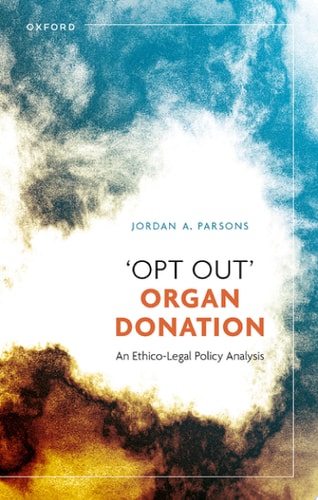
Opt Out Organ Donation: An Ethico-Legal Policy Analysis
0
0
As an Amazon Associate and affiliate partner, Menrva Books earns from qualifying purchases. Learn more
Author Description
A global shortage of organs for transplantation has led to myriad proposals for improving supply. One that has gained significant traction is so-called “opt out”, wherein donation becomes the default, and the burden falls on those who do not want their organs used to formally record this.Despite widespread uptake, opt out models are far from flawless. They have, in their theoretical form, been criticised for masquerading as informed consent and inadequately involving families in decisions. In their realised form, they have been suggested to be redundant given practical challenges in following through with the core tenet. Alongside such critiques are concerns around designing opt out systems to satisfy public awareness requirements and protect the vulnerable from inappropriate inclusion.This book offers the first comprehensive analysis of all four UK opt out systems. Rather than assessing the success of these systems in increasing transplantation activity - which it is ultimately too soon for - this book examines the paths to and design of these systems. In dissecting the construction, it manoeuvres towards a better understanding of what a “good” opt out system might look like, offering important considerations in the development of future examples elsewhere.Through this analysis, this book also explores the relationship between the four UK nations in their respective moves to introduce opt out. Further, it incorporates comparative discussion with the systems of the Crown Dependencies, highlighting important interplays between the UK and these neighbouring jurisdictions. In doing so, it contributes to the growth of scholarly interest in the impact of devolution on healthcare law.
Menrva's Summary
THE THESIS
This book investigates the ethical and legal implications of "opt out" organ donation systems, questioning how these frameworks balance state policy with individual autonomy. Jordan A. Parsons provides a rigorous examination of the four distinct opt out models implemented across the United Kingdom. By analyzing the legislative construction and design of these systems, the author evaluates the challenges of informed consent and the practical limitations of default donation policies.
THE SCOPE MAP
What You Will Find
- Comparative analysis of the four UK opt out organ donation systems
- Examination of the interplay between UK nations and Crown Dependencies
- Discussion on the impact of devolution on healthcare law
- Theoretical critique of informed consent and family involvement
Scope Limits
- Does not provide a quantitative assessment of transplantation success rates
- Does not offer a definitive global policy recommendation
THE AUTHORITY PERSPECTIVE
Experts recognize this work as a significant contribution to the study of healthcare law and the complexities of devolved policy-making. Readers frequently note the academic density of the prose, which serves as a foundational resource for scholars and policymakers interested in the intersection of ethics and legislative design.
Page Count:
256
Publication Date:
2025-05-27
Publisher:
Oxford University Press
ISBN-10:
0192870807
ISBN-13:
9780192870803
Non-Fiction
Politics
Public Policy
Medicine
Ethics
Health Law
Medical Ethics
Law
Healthcare Policy
Legislation Medical
Medical Law
Community Tags
Similar Books