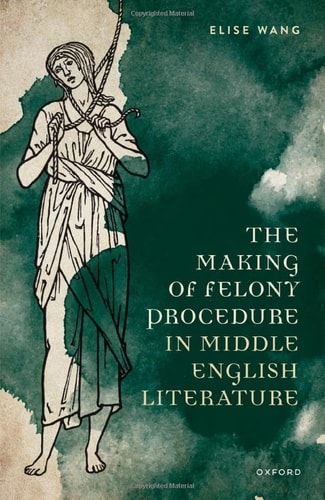
The Making of Felony Procedure in Middle English Literature
0
0
As an Amazon Associate and affiliate partner, Menrva Books earns from qualifying purchases. Learn more
Author Description
The Making of Felony Procedure in Middle English Literature explores the literary inheritance of criminal procedure in thirteenth to fifteenth century English law, focusing on felony, the gravest common law offense. Most scholarship in medieval law and literature has focused on statute and theory, drawing from the instantiating texts of English law: acts of Parliament, judicial treatises, the Magna Carta. But those whose job it was to write about the law rarely wrote about felony. Its definition was left to its practice--from investigation to conviction--and that procedure fell to local communities who were generally untrained in the law. Left with many practical and ethical questions and few legal answers, they turned to cultural ones, archived in sermons they had heard, plays they had seen, and poetry they knew. This book reads the documents of criminal procedure--coroners' reports, plea rolls, and gaol delivery records--alongside literary scenes of investigation, interrogation, and witnessing to tell a new intellectual history of criminal procedure's beginnings.The chapters of The Making of Felony Procedure guide the reader through the steps of a felony prosecution, from act to conviction, examining the questions local communities faced at each step. What evidence should be prioritized in a death investigation? Should the accused consider narrative satisfaction when building his plea? What are the dangers of a witnessing system that depends so heavily on a few "oathworthy" men? What can a jury do if the accused's guilt seems partial or complex? And what if the defendant-for whatever reason--refuses to participate in this new, still--delicate system of justice? The book argues that answers they found, and the sources that informed them, created the system that became modern criminal procedure. The epilogue offers some thoughts about the resilience and incoherence of the concept of felony, from the start of the jury trial to the present day.
Menrva's Summary
THE THESIS
This book investigates how medieval English communities utilized cultural narratives to define and execute felony procedure in the absence of formal legal guidance. Elise Wang, a scholar of medieval literature and law, examines the intersection of administrative records and creative texts from the thirteenth to fifteenth centuries. She argues that the practical application of criminal law was shaped by the literary and oral traditions familiar to local, untrained participants rather than solely by high-level statutes or judicial treatises.
THE SCOPE MAP
What You Will Find
- Analysis of primary legal documents including coroners' reports, plea rolls, and gaol delivery records.
- Examination of medieval cultural artifacts such as sermons, plays, and poetry as sources of legal logic.
- A step-by-step breakdown of the felony prosecution process from initial investigation to final conviction.
Scope Limits
- The study focuses specifically on the thirteenth to fifteenth centuries in England.
- The analysis excludes high-level parliamentary statutes and formal judicial theory in favor of local, community-based practice.
THE AUTHORITY PERSPECTIVE
Scholars in the field of law and literature identify this work as a significant contribution to understanding the origins of modern criminal procedure. Readers frequently note the academic density of the prose and the author's ability to bridge the gap between administrative history and literary analysis.
Page Count:
192
Publication Date:
2024-01-01
Publisher:
Oxford University Press
ISBN-10:
0192870726
ISBN-13:
9780192870728
History
Literary Criticism
Legal History
Law and literature
Community Tags
Other Editions(3)
Similar Books

Reader Comments
Share Your Thoughts
No comments yet. Be the first to share your thoughts!