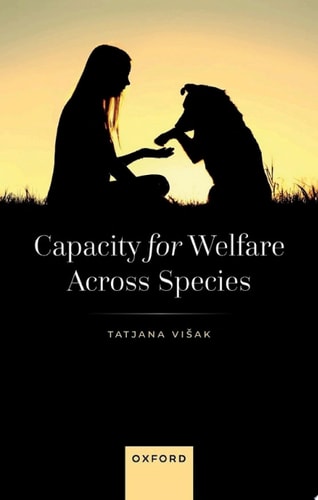
Capacity for Welfare across Species
0
0
As an Amazon Associate and affiliate partner, Menrva Books earns from qualifying purchases. Learn more
Author Description
Is my dog, with his joyful and carefree life, better off than I am? Do hens in battery cages have worse lives than cows at pasture? Will my money improve welfare more if I spend it on helping people or if I benefit chickens? How can we assess the harm of climate change for both humans and non-humans? If we want to systematically compare welfare across species, we first need to explore whether welfare subjects of different species have the same or rather a different capacity for welfare.According to what seems to be the dominant philosophical view, welfare subjects with higher cognitive capacities have a greater capacity for welfare and are generally much better off than those with lower cognitive capacities. Višak carefully explores and rejects this view. She argues instead that welfare subjects of different species have the same capacity for welfare despite different cognitive capacities. This book prepares the philosophical ground for comparisons of welfare across species. It will inform and inspire ethicists and animal welfare scientists alike, as well as a broader readership interested in wellbeing, animals, and ethics. Besides different views about capacity for welfare across species, the book discusses animal capacities, moral status, harm of death, whether bringing additional well-off individuals into existence is a good thing, and practical implications of these topics for counting and comparing the welfare of animals of different species.
Menrva's Summary
THE THESIS
This book investigates whether welfare subjects of different species possess an equal capacity for welfare, challenging the prevailing philosophical assumption that cognitive complexity dictates the quality of an individual's life. Tatjana Višak, a scholar in moral philosophy, examines the relationship between cognitive capacity and welfare. She argues that the dominant view—which posits that higher cognitive function equates to a greater capacity for well-being—is flawed. By rejecting this hierarchy, the author establishes a new framework for comparing the welfare of humans and non-human animals.
THE SCOPE MAP
What You Will Find
- Analysis of the relationship between cognitive capacity and welfare potential
- Philosophical arguments regarding moral status and the harm of death
- Discussion on population ethics and the value of bringing new individuals into existence
- Practical methodologies for comparing and quantifying welfare across diverse species
Scope Limits
- The text does not provide a comprehensive biological manual for animal behavior
- It does not offer specific policy recommendations for legislative reform
THE AUTHORITY PERSPECTIVE
Experts in animal ethics and welfare science identify this work as a significant contribution to the philosophical debate on interspecies welfare comparison. Readers frequently note the academic density of the prose, which is intended for those already familiar with ethical theory and moral philosophy.
Page Count:
160
Publication Date:
2022-01-01
Publisher:
OUP Oxford
ISBN-10:
019288235X
ISBN-13:
9780192882356
Philosophy
Ethics
Applied ethics
Zoology
Animal Ethics
Animal Welfare
Moral Philosophy
Community Tags
Similar Books