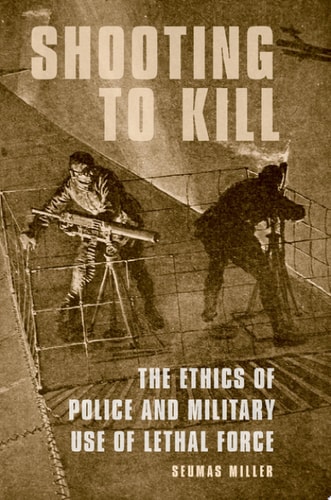
Shooting to Kill
0
0
As an Amazon Associate and affiliate partner, Menrva Books earns from qualifying purchases. Learn more
Author Description
Terrorism, The Use Of Military Force In Afghanistan, Iraq And Syria, And The Fatal Police Shootings Of Unarmed Persons Have All Contributed To Renewed Interest In The Ethics Of Police And Military Use Of Lethal Force And Its Moral Justification. In This Book, Philosopher Seumas Miller Analyzes The Various Moral Justifications And Moral Responsibilities Involved In The Use Of Lethal Force By Police And Military Combatants, Relying On A Distinctive Normative Teleological Account Of Institutional Roles. His Conception Constitutes A Novel Alternative To Prevailing Reductive Individualist And Collectivist Accounts. As Miller Argues, Police And Military Uses Of Lethal Force Are Morally Justified In Part By Recourse To Fundamental Natural Moral Rights And Obligations, Especially The Right To Personal Self-defense And The Moral Obligation To Defend The Lives Of Innocent Others. Yet The Moral Justification For Police And Military Use Of Lethal Force Is To Some Extent Role-specific. Both Police Officers And Military Combatants Evidently Have An Institutionally-based Moral Duty To Put Themselves In Harm's Way To Protect Others. Under Some Circumstances, However, Police Have An Institutionally Based Moral Duty To Use Lethal Force To Uphold The Law; And Military Combatants Have An Institutionally Based Moral Duty To Use Lethal Force To Win Wars. Two Key Notions In Play Are Joint Action And The Natural Right To Self-defense. Miller Uses A Relational Individualist Theory Of Joint Actions To Construct The Notion Of Multi-layered Structures Of Joint Action In Order To Explicate Organizational Action. He Also Provides A Novel Theory Of Justifiable Killing In Self-defense. Over The Course Of His Book, Miller Covers A Variety Of Urgent Topics, Such As Police Shootings Of Armed Offenders, Police Shooting Of Suicide-bombers, Targeted Killing, Autonomous Weapons, Humanitarian Armed Intervention, And Civilian Immunity.
Menrva's Summary
THE THESIS
This book investigates the moral justifications and ethical responsibilities inherent in the use of lethal force by police and military personnel. Philosopher Seumas Miller utilizes a normative teleological account of institutional roles to evaluate these actions. By moving beyond reductive individualist and collectivist frameworks, he argues that the morality of lethal force is grounded in both fundamental natural rights, such as self-defense, and specific institutional obligations.
THE SCOPE MAP
What You Will Find
- A relational individualist theory of joint actions applied to organizational behavior.
- A multi-layered structural framework for analyzing institutional lethal force.
- Ethical analysis of targeted killing, autonomous weapons, and humanitarian intervention.
Scope Limits
- The text does not provide a comprehensive legal manual for specific jurisdictions.
- It does not offer a historical account of specific military conflicts beyond their ethical implications.
THE AUTHORITY PERSPECTIVE
Experts recognize this work as a significant contribution to the philosophy of institutional action and applied ethics. Readers frequently note the academic density of the prose, which requires a background in moral philosophy to fully engage with the author's normative arguments.
Page Count:
336
Publication Date:
2016-01-01
Publisher:
Oxford University Press
ISBN-10:
0190626151
ISBN-13:
9780190626150
Philosophy
Ethics
Law Enforcement
Applied ethics
Military Studies
Community Tags
Similar Books