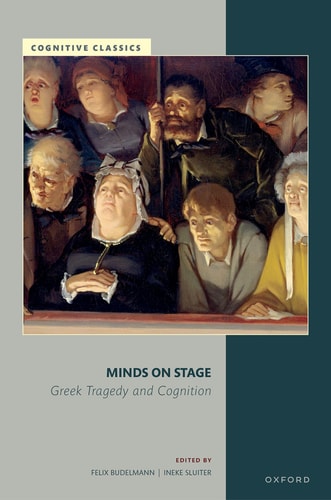
Minds on Stage: Greek Tragedy and Cognition
0
0
As an Amazon Associate and affiliate partner, Menrva Books earns from qualifying purchases. Learn more
Author Description
Greek tragedy parades, tests, stimulates, and upends human cognition. Characters plot deception, try to fathom elusive gods, and fail to recognise loved ones. Spectators observe the characters' cognitive limitations and contemplate their own, grapple with moral quandaries and emotional breakdown, overlay mythical past and topical present, and all the while imagine that a man with a mask is Helen of Troy. With broad coverage of both plays and cognitive capabilities, Minds on Stage pursues a dual aim: to expand our understanding of Greek tragedy and to use Greek tragedy as a focal point for exploring cognitive thinking about literature.After an introduction that considers questions of methodology, the volume is divided into three parts. Part One examines the dynamics of mind-reading by characters and audience, with articles on Aeschylus, Sophocles, and Euripides. The chapters in Part Two study aspects of the characters' cognitive sense-making, from individual styles of attributing causes and different manners of remembering, to the use of objects as tools for thinking. Finally, Part Three turns to the cognitive dimension of spectating. The articles treat the spectators' generic expectations and different modes of engagement with the fictional worlds of the plays, the joint nature of their attention to the drama, the nexus between aesthetic illusion and the ethics of deception, as well as the situated nature of cognition that helps both audiences and characters make sense of morally complex situations.
Menrva's Summary
THE THESIS
How does the intersection of cognitive science and ancient Greek tragedy reveal the mechanics of human thought, perception, and moral reasoning? Editors Felix Budelmann and Ineke Sluiter assemble a collection of scholarly essays that utilize cognitive theory to analyze the dramatic structures of Aeschylus, Sophocles, and Euripides. By examining the cognitive limitations of tragic characters and the psychological engagement of the audience, the contributors argue that these ancient texts serve as sophisticated laboratories for understanding human sense-making and mental processing.
THE SCOPE MAP
What You Will Find
- Analysis of mind-reading and theory of mind within tragic character interactions.
- Examination of cognitive sense-making, including causal attribution and memory styles.
- Investigation into the spectator's role, focusing on generic expectations and joint attention.
- Methodological frameworks for applying cognitive science to classical literature.
Scope Limits
- The volume does not provide a comprehensive history of Greek theater production.
- It does not offer a general introduction to cognitive science outside of its application to literary analysis.
THE AUTHORITY PERSPECTIVE
Scholars in the field of classics recognize this volume as a significant contribution to the 'Cognitive Classics' movement, noting its rigorous application of psychological theory to ancient texts. Readers frequently highlight the academic density of the prose, which is intended for researchers and advanced students of literature and cognitive studies.
Page Count:
272
Publication Date:
2023-09-01
Publisher:
Oxford University Press
ISBN-10:
0192888935
ISBN-13:
9780192888938
Drama
History - Ancient
Literary Criticism
Theater
Community Tags
Similar Books