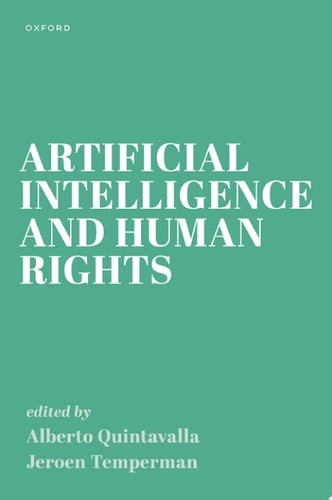
Artificial Intelligence and Human Rights
0
0
As an Amazon Associate and affiliate partner, Menrva Books earns from qualifying purchases. Learn more
Author Description
The scope of Artificial Intelligence's (AI) hold on modern life is only just beginning to be fully understood. Academics, professionals, policymakers, and legislators are analysing the effects of AI in the legal realm, notably in human rights work. Artificial Intelligence technologies and modern human rights have lived parallel lives for the last sixty years, and they continue to evolve with one another as both fields take shape.Human Rights and Artificial Intelligence explores the effects of AI on both the concept of human rights and on specific topics, including civil and political rights, privacy, non-discrimination, fair procedure, and asylum. Second- and third-generation human rights are also addressed. By mapping this relationship, the book clarifies the benefits and risks for human rights as new AI applications are designed and deployed.Its granular perspective makes Human Rights and Artificial Intelligence a seminal text on the legal ramifications of machine learning. This expansive volume will be useful to academics and professionals navigating the complex relationship between AI and human rights.
Menrva's Summary
THE THESIS
This book investigates the complex legal and ethical intersection between rapidly evolving artificial intelligence technologies and established human rights frameworks. Edited by legal scholars Alberto Quintavalla and Jeroen Temperman, the volume synthesizes contributions from various experts to analyze how machine learning impacts both the conceptual foundations of human rights and their practical application in modern governance. The authors provide a structured framework for evaluating the risks and benefits inherent in the deployment of AI across diverse legal sectors.
THE SCOPE MAP
What You Will Find
- Analysis of civil and political rights in the context of algorithmic decision-making
- Examination of privacy, non-discrimination, and fair procedure standards
- Discussion of second- and third-generation human rights
- Case studies on AI applications in asylum and administrative law
Scope Limits
- Does not provide technical programming tutorials for AI development
- Does not cover speculative future scenarios beyond current legal trajectories
THE AUTHORITY PERSPECTIVE
Experts identify this volume as a comprehensive resource for legal professionals and policymakers navigating the intersection of technology and international law. Readers frequently note the academic density of the prose, which serves as a rigorous reference for those studying the regulatory challenges of machine learning.
Page Count:
688
Publication Date:
2023-01-01
Publisher:
Oxford University Press
ISBN-10:
0192882481
ISBN-13:
9780192882486
Technology
Ethics
Jurisprudence
Law
Human rights
Community Tags
Similar Books