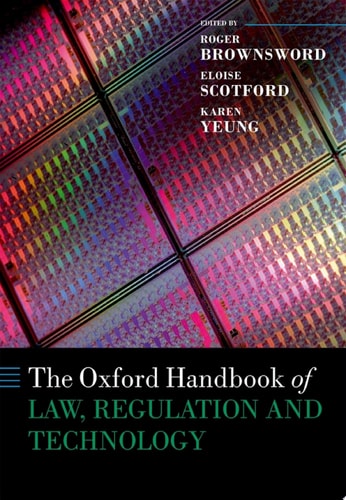
The Oxford Handbook of Law, Regulation and Technology
0
0
As an Amazon Associate and affiliate partner, Menrva Books earns from qualifying purchases. Learn more
Author Description
The variety, pace, and power of technological innovations that have emerged in the 21st Century have been breathtaking. These technological developments, which include advances in networked information and communications, biotechnology, neurotechnology, nanotechnology, robotics, and environmental engineering technology, have raised a number of vital and complex questions. Although these technologies have the potential to generate positive transformation and help address 'grand societal challenges', the novelty associated with technological innovation has also been accompanied by anxieties about their risks and destabilizing effects. Is there a potential harm to human health or the environment? What are the ethical implications? Do this innovations erode of antagonize values such as human dignity, privacy, democracy, or other norms underpinning existing bodies of law and regulation? These technological developments have therefore spawned a nascent but growing body of 'law and technology' scholarship, broadly concerned with exploring the legal, social and ethical dimensions of technological innovation. This handbook collates the many and varied strands of this scholarship, focusing broadly across a range of new and emerging technology and a vast array of social and policy sectors, through which leading scholars in the field interrogate the interfaces between law, emerging technology, and regulation. Structured in five parts, the handbook (I) establishes the collection of essays within existing scholarship concerned with law and technology as well as regulatory governance; (II) explores the relationship between technology development by focusing on core concepts and values which technological developments implicate; (III) studies the challenges for law in responding to the emergence of new technologies, examining how legal norms, doctrine and institutions have been shaped, challenged and destabilized by technology, and even how technologies have been shaped by legal re
Menrva's Summary
THE THESIS
How does the rapid advancement of 21st-century technology challenge existing legal frameworks, ethical norms, and regulatory institutions? The editors, Eloise Scotford, Karen Yeung, and Roger Brownsword, assemble a collection of essays from leading scholars to analyze the intersection of emerging technologies—such as biotechnology, robotics, and AI—with established legal doctrine. The text provides a comprehensive framework for understanding how technological innovation destabilizes traditional governance while simultaneously offering new tools for social and environmental management.
THE SCOPE MAP
What You Will Find
- Analysis of legal and ethical implications of biotechnology, nanotechnology, and robotics.
- Examination of core concepts like human dignity, privacy, and democracy in the digital age.
- Theoretical frameworks for regulatory governance and institutional adaptation.
Scope Limits
- The text does not provide specific legal advice for individual jurisdictions or current legislative drafting.
- It does not cover the technical engineering specifications of the technologies discussed.
THE AUTHORITY PERSPECTIVE
Experts identify this handbook as a foundational reference for scholars and practitioners navigating the intersection of law and emerging technology. Readers frequently note the academic density of the prose, which is tailored for an audience of legal professionals, policy analysts, and advanced students in the field.
Page Count:
1357
Publication Date:
2017-01-01
Publisher:
OUP Oxford
ISBN-10:
0191502235
ISBN-13:
9780191502231
Ethics
Regulation
Technology
Technology Law
Professional Career & Trade
Governance
Sociology
Law
Community Tags
Other Editions(2)
Similar Books











Reader Comments
Share Your Thoughts
No comments yet. Be the first to share your thoughts!